

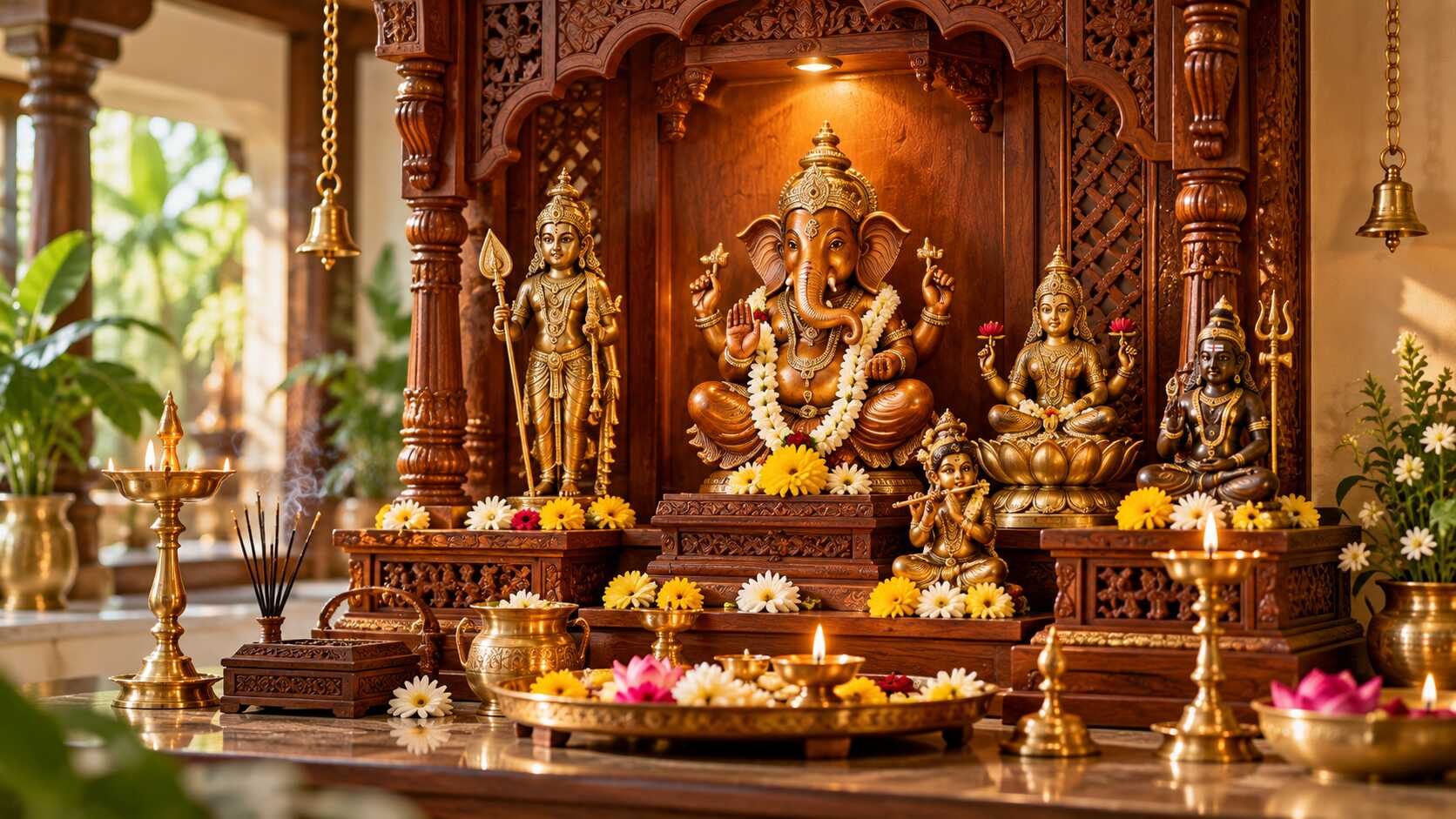

Learning how to choose idols and murtis for your home mandir starts with more than appearance. In Tamil Nadu homes, a mandir may be a traditional wooden pooja unit, part of a dedicated prayer room or a compact corner in an apartment. The idol you choose should suit the available space, your family’s worship practices and the way the mandir is used every day.
A beautifully detailed murti may look impressive in a showroom or online photograph, but the right choice for your home depends on its actual dimensions, material, stability and maintenance needs.
Here are the practical factors to consider before choosing an idol for your home pooja mandir.
1. Measure Your Home Mandir Before Choosing an Idol

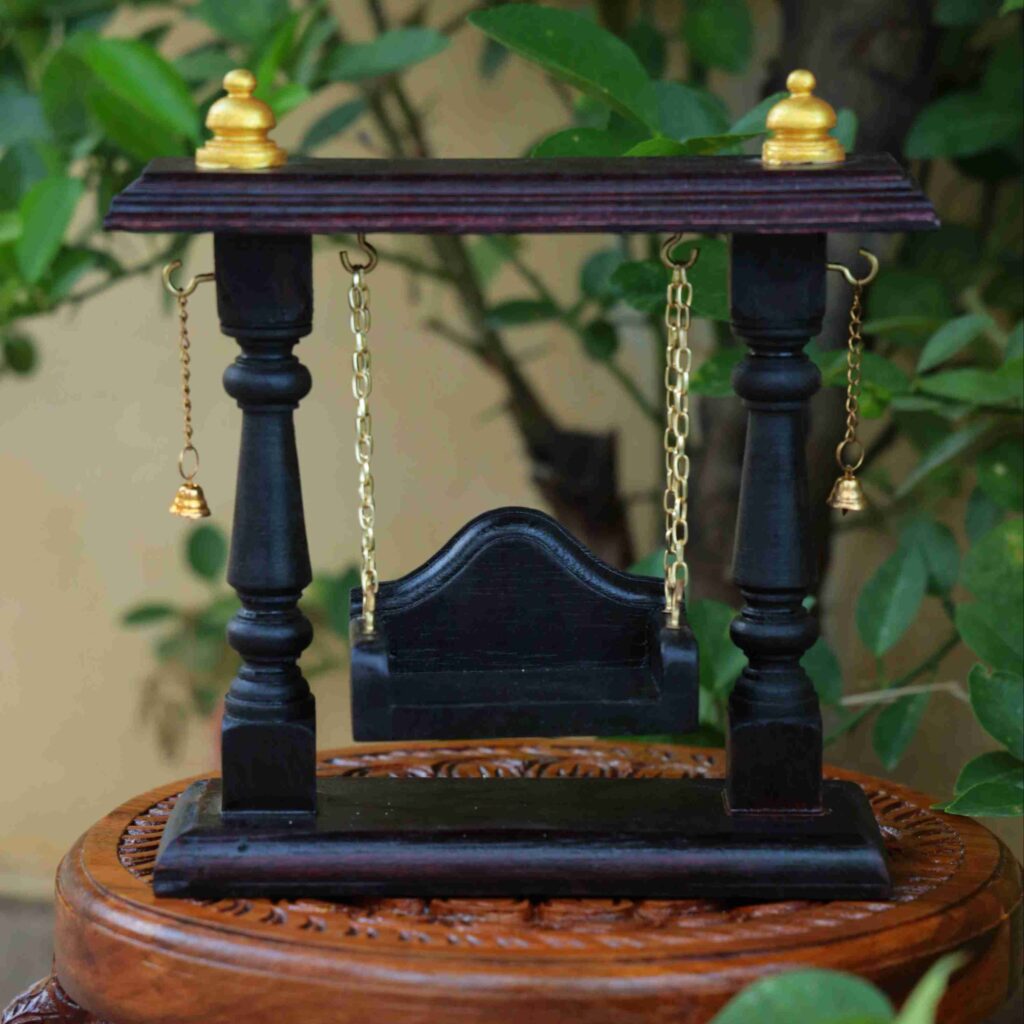
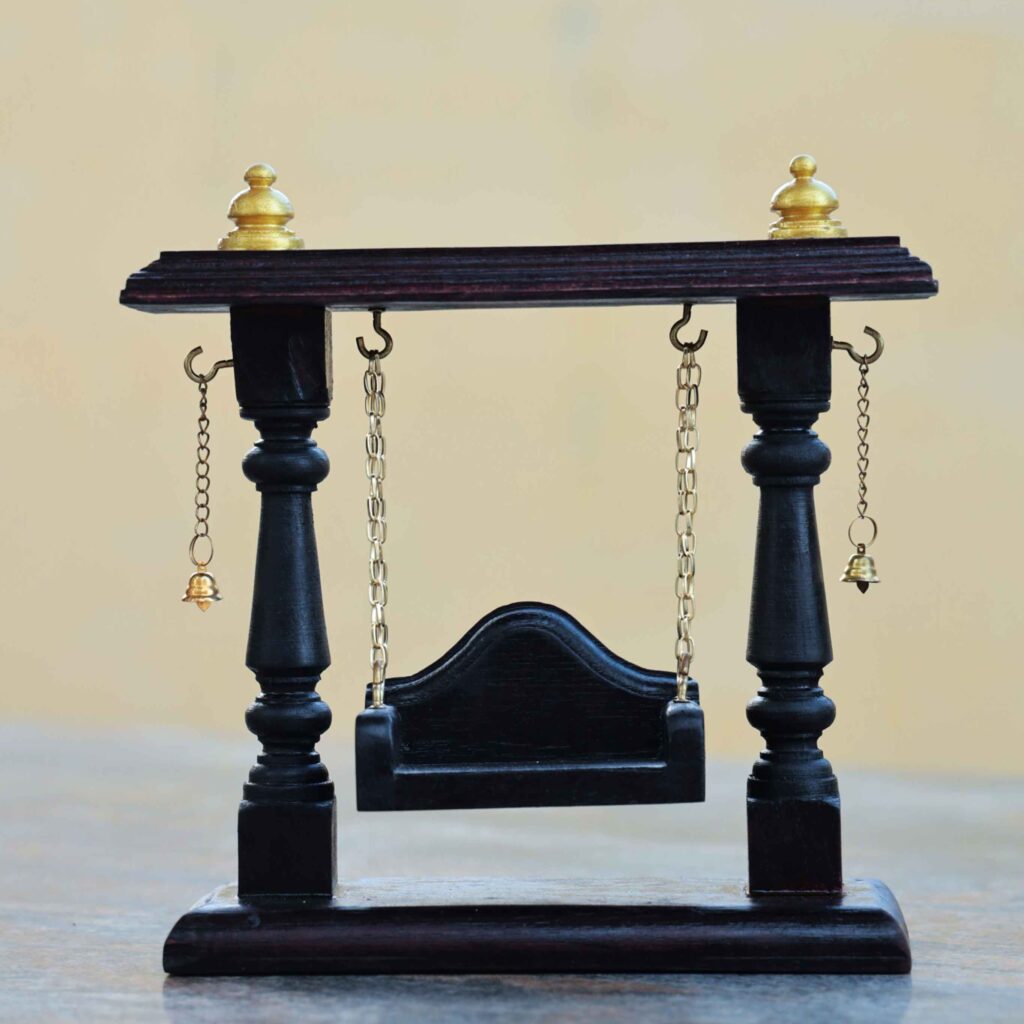
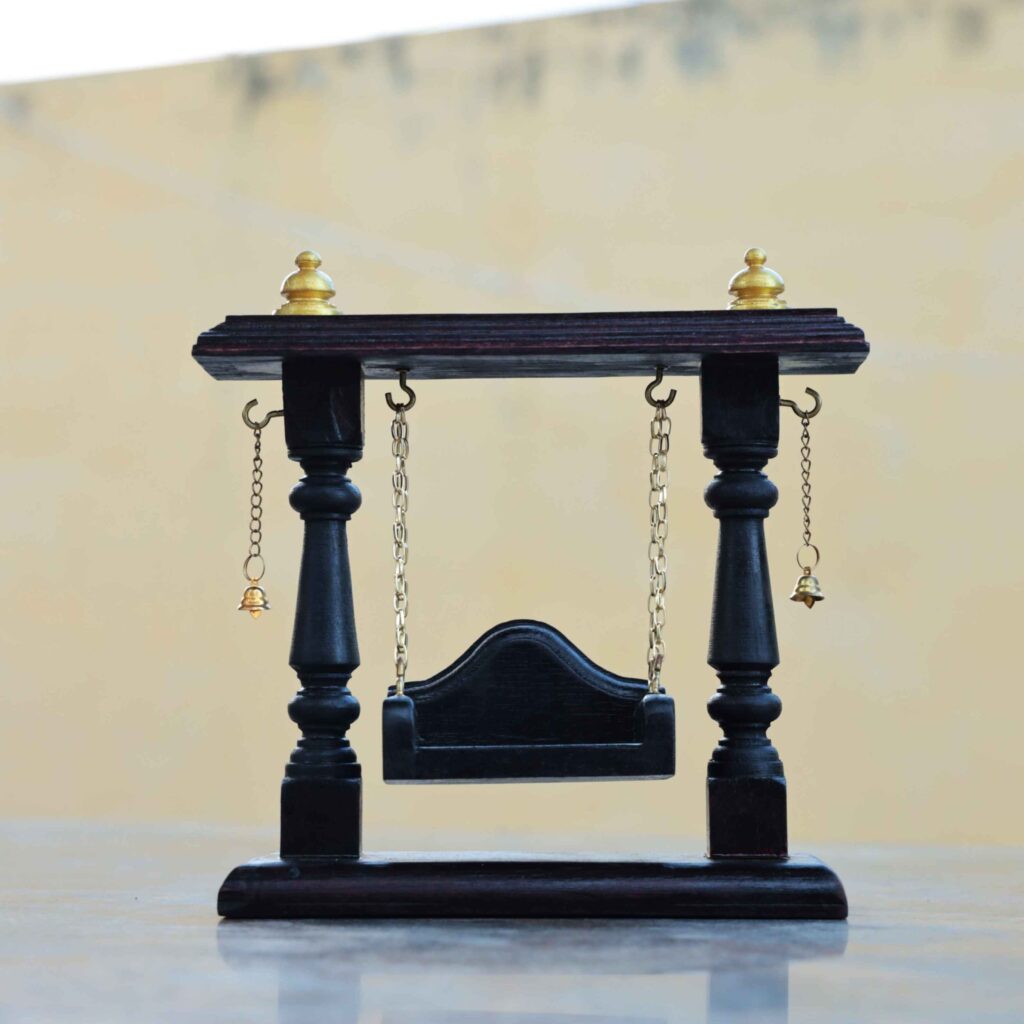
Wooden Jhula (Swing)
Invoke divine serenity and festive devotion in your home with the Dakshaara Handcrafted Teak Wood Jhula Swing, sculpted from solid, seasoned teak wood.
The first step is measuring the space available.
For a Tamil Nadu apartment or compact wall-mounted mandir, even a few extra centimetres can make a noticeable difference.
Measure:
- Mandir width
- Available height
- Platform depth
- Space above the idol
- Space needed for lamps and pooja accessories
Also consider the idol’s complete dimensions rather than its height alone.
An idol with a wide base, backplate, halo or extended features may require considerably more space than its stated height suggests.
Choose the idol to fit the mandir—not the mandir to accommodate an oversized idol.
2. Choose a Deity Meaningful to Your Family
The most important part of choosing a home mandir idol is whether it is meaningful to your family.
Families may choose deities such as Ganesha, Lakshmi, Krishna, Shiva, Murugan, Durga, Saraswati, Hanuman or others according to their personal devotion and traditions.
There is no need to select an idol simply because it is popular in home décor.
If your family follows specific practices regarding which deities are worshipped or kept together, those practices should guide your decision.
For questions involving religious rules or rituals, family tradition or guidance from a knowledgeable person within your tradition is more appropriate than a generic décor article.
3. Consider the Material of the Murti
The material affects both appearance and maintenance.
Common choices include:
- Brass and other metals
- Stone
- Clay
- Wood
- Other crafted materials
Brass and Metal Idols
Metal murtis can pair naturally with traditional South Indian pooja décor, especially when your mandir already includes brass lamps, bells or other metal accessories.
Stone Murtis
Stone can provide a substantial, timeless appearance and may work particularly well in a dedicated pooja room.
Clay Idols
Clay murtis can be suitable for particular festive or temporary worship traditions, depending on your family’s practices.
Wooden Idols
A wooden idol can complement a home that already features a carved wooden mandir, natural finishes or handcrafted décor.
Do not choose material based only on colour or appearance. Consider how the murti should be cleaned, handled and maintained.
4. Match the Idol to the Style of Your Wooden Mandir
A traditional wooden mandir already has a strong visual identity.
If your pooja unit features carved panels, arches or detailed woodwork, a highly elaborate idol plus multiple decorative accessories may make the entire space feel visually heavy.
Instead, consider the relationship between:
Wood + Idol + Lighting + Flowers + Pooja Accessories
For example, a metal idol can create an attractive contrast against natural wood, while a wooden murti can create a more unified handcrafted appearance.
You do not need every element to match.
5. Choose the Right Idol Proportion for a Small Pooja Space
Many Tamil Nadu homes, particularly apartments, use compact pooja corners rather than large dedicated rooms.
For a small home mandir, proportion is more important than size alone.
Choose an idol that leaves enough room for:
- A diya or suitable lamp
- Flowers
- Essential pooja items
- Cleaning
- Everyday prayer activities
A smaller murti surrounded by some open space can often look more balanced than a large idol that occupies the entire platform.
6. Think About the Idol’s Finish and Colour
The finish of a murti can influence how it works with the rest of your pooja décor.
A few combinations to consider:
- Brass or gold-toned idol + natural wooden mandir
- Dark stone + warm wooden finish
- Painted murti + simple neutral background
- Natural wood + handcrafted accessories
If your mandir already contains colourful flowers such as jasmine, roses or marigolds, you may not need many additional decorative colours.
The objective is visual balance rather than making every item identical.
7. Check the Idol’s Stability Before Placing It
A beautiful murti still needs to sit securely.
Before placing it in your home temple, check:
- Whether the base sits evenly
- Whether the idol wobbles
- Whether the platform can support its weight
- Whether enough space remains around it
- Whether nearby accessories could knock it over
This becomes particularly important when the mandir is in a busy living area or a home with children or pets.
8. Consider Maintenance Before Buying a Murti
Different materials and finishes require different care.
Before purchasing, check whether the idol can be:
- Dust-cleaned
- Wiped with a damp cloth
- Washed
- Polished
- Exposed to moisture
Do not assume that every murti can be cleaned in the same way.
For a handcrafted wooden idol, for example, the finish and manufacturer’s care instructions should determine the appropriate cleaning method.
For valuable, delicate or specially finished pieces, follow the seller’s specific recommendations.
9. Plan the Idol Around Your Daily Pooja Routine
An idol should work within your actual routine rather than simply look good in a photograph.
Think about where you normally place:
- Diya
- Incense holder
- Flowers
- Kumkum
- Turmeric
- Pooja tray
- Other daily essentials
If the idol leaves no usable space for these items, it may be too large for the mandir.
This is especially relevant for compact Tamil Nadu homes where one small pooja unit may need to accommodate everything used during daily prayer.
10. Choose a Reliable Source When Buying Online
When purchasing a murti online, product information becomes particularly important.
Before ordering, check:
- Exact dimensions
- Material
- Product weight, where relevant
- Clear photographs
- Base dimensions
- Finish
- Care instructions
- Return or replacement information
Do not judge the size from photographs alone.
A product shown beside other objects online can appear much smaller or larger than it actually is. Compare the stated measurements with the platform inside your mandir before purchasing.
How Many Idols Should You Keep in a Home Mandir?
There is no single number that applies to every household.
Instead, consider:
- Your family’s worship practices
- The size of your mandir
- The deities you regularly worship
- Whether each idol can be arranged comfortably
- Any guidance specific to your tradition
Avoid adding idols simply because there is an empty shelf.
A smaller number of thoughtfully arranged murtis can make a compact mandir easier to maintain and use.
How to Arrange Multiple Idols in a Home Mandir
If you have several murtis, think about visual hierarchy as well as your family’s worship practices.
Your primary deity can occupy the main visual position, with other idols arranged around it according to your family’s traditions.
Leave enough visual space between pieces so that each idol remains clearly visible.
Then place accessories such as diyas, flowers and bells around the arrangement without blocking the murtis.
Idol Placement: Follow Your Family’s Tradition
You may find strict online advice about idol direction, deity combinations and placement.
These practices can vary between families and traditions.
For this reason, do not treat a generic internet rule as a universal religious requirement.
If your family follows a particular Tamil tradition, follow that practice. If you are unsure about a religious question, consult a knowledgeable priest or trusted person familiar with your family’s tradition.
Pair Your Idol With Thoughtful Pooja Accessories
Once the murti is selected, choose accessories that support rather than dominate the prayer space.
Useful options can include:
- Wooden diya stands
- Pooja trays
- Incense holders
- Flower holders
- Bells
- Kumkum containers
- Handcrafted wooden décor
For a wooden mandir, natural wood accessories can create continuity, while brass elements can provide contrast.
Fresh jasmine, marigold or seasonal flowers can add colour without requiring many additional decorative objects.
Common Mistakes When Choosing a Home Mandir Idol
Buying Without Measuring
Always check the complete dimensions before purchasing.
Choosing Only by Appearance
A beautiful photograph does not tell you everything about size, weight or maintenance.
Overcrowding the Mandir
More idols and accessories do not automatically create a better prayer space.
Ignoring the Base
A stable base is important for everyday use.
Following Every Online Rule
Religious practices vary. Follow your family tradition or seek appropriate guidance.
Treating the Mandir Only as Home Décor
A mandir can be visually beautiful, but its primary purpose remains prayer and worship.
Simple Murti Buying Checklist
| Question | Why It Matters |
|---|---|
| Does the idol fit? | Prevents overcrowding |
| Is the base stable? | Supports safe placement |
| What is it made from? | Determines care requirements |
| Are the dimensions clear? | Helps with accurate purchasing |
| Does it suit your tradition? | Keeps the choice meaningful |
| Can you maintain it? | Protects the idol’s finish |
| Does it complement your mandir? | Creates visual harmony |
Create a Balanced Tamil Nadu Home Mandir
Choosing the right idol is only one part of creating a meaningful prayer space.
The surrounding details matter too.
A carved wooden mandir, a carefully selected murti, a warm diya, fresh flowers and a few handcrafted accessories can create a calm arrangement without filling every available surface.
For a compact apartment, prioritise proportion and function. For a traditional pooja room, allow the craftsmanship of the mandir and the character of the idol to remain visible.
The best arrangement is one that feels appropriate to your family’s practices and comfortable to use every day.
Thoughtful Mandir Décor From Dakshaara
At Dakshaara, we believe a home becomes personal through the pieces we choose and cherish.
Our focus on handcrafted home décor extends naturally to meaningful spaces such as the home mandir. Once you have selected your idols according to your family’s traditions, thoughtful accessories can help complete the space.
Explore Dakshaara’s Puja & Spiritual and handcrafted home décor collections for wooden diya stands, traditional accessories and other pieces that can complement your mandir without overwhelming it.
Every Piece Builds a Home.
FAQs
How do I choose the right idol size for my home mandir?
Measure the width, height and depth of your mandir before purchasing. Choose an idol that fits comfortably while leaving enough room for flowers, lamps, essential pooja items and cleaning.
Which idols are suitable for a home mandir?
The choice depends on your family’s beliefs, traditions and personal devotion. Families may worship deities such as Ganesha, Lakshmi, Krishna, Shiva, Murugan, Durga, Saraswati or Hanuman, among others.
How many idols should I keep in my home mandir?
There is no single number suitable for every household. Follow your family’s traditions and make sure the idols can be arranged comfortably without overcrowding the mandir.
Which material is best for a home mandir idol?
There is no universally best material. Metal, stone, clay and wood have different visual and maintenance characteristics. Choose according to your family’s practices, available space and ability to maintain the piece.
Should I choose a large idol for my home temple?
Not necessarily. The idol should be proportionate to the mandir. A smaller idol with sufficient surrounding space can create a more balanced setup than a large murti that fills the entire platform.
How should I arrange multiple idols in my home mandir?
Arrange them according to your family’s worship practices and leave enough space for each idol to remain visible. For questions about specific religious placement practices, consult someone knowledgeable in your tradition.
How do I maintain a murti at home?
Care depends on the material and finish. Follow the seller’s instructions and avoid using water, polish or abrasive cleaning products unless they are specifically suitable for that idol.
Leave a Reply