

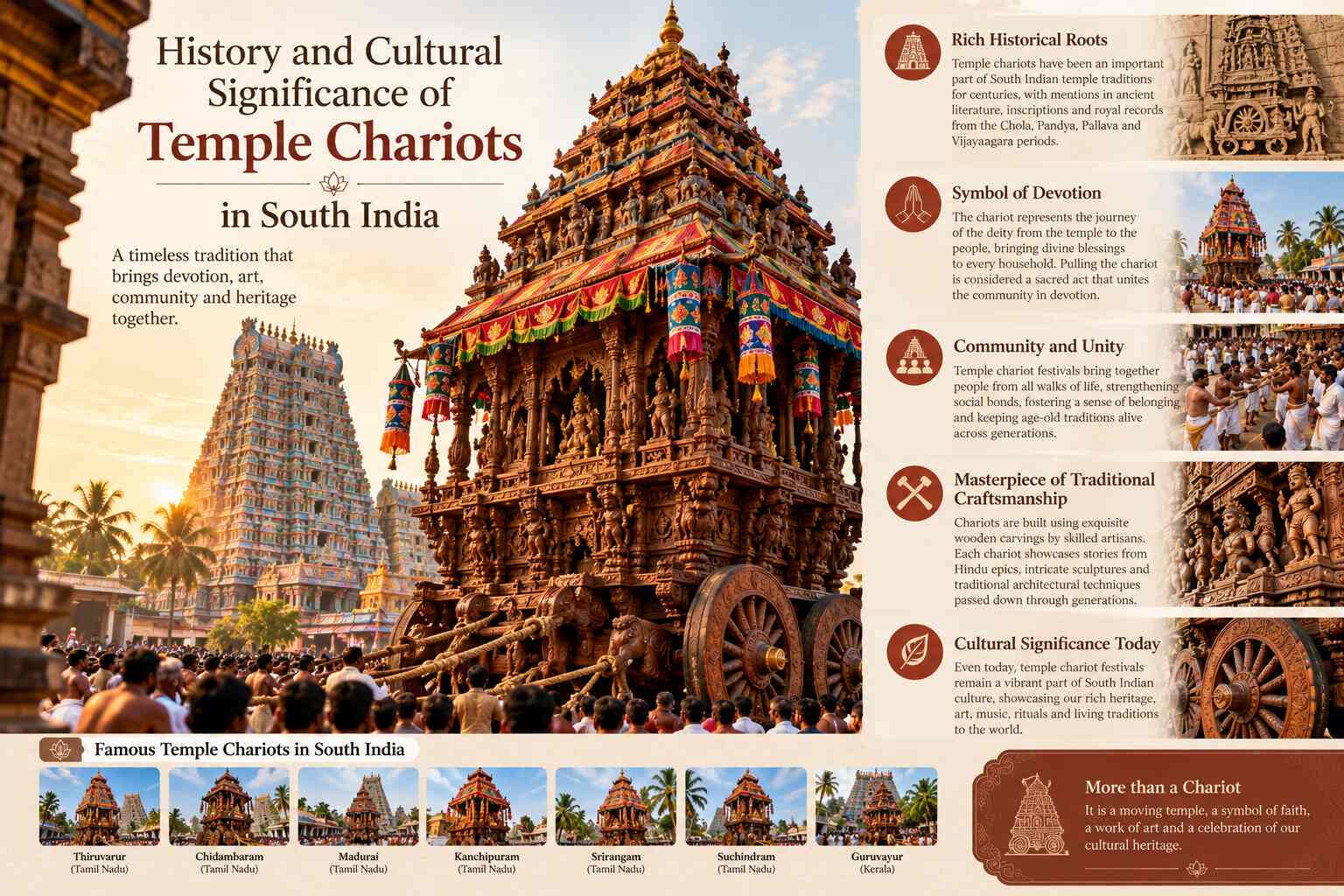

The history and cultural significance of temple chariots in South India is closely connected with Tamil Nadu’s temple traditions, wooden craftsmanship and community festivals. Known as ther in Tamil, these enormous wooden structures carry processional forms of deities through temple streets, turning the surrounding town into part of the festival.
From the massive carved wooden chariots of Tamil Nadu to the artisans who build and maintain them, the tradition brings together devotion, architecture, sculpture, craftsmanship and community participation.
Unlike ordinary vehicles, a temple chariot is designed for a ceremonial journey. Its slow movement through the streets creates a shared experience in which the temple, deity, artisans and devotees become part of one cultural event.
What Is a Temple Chariot Called in Tamil Nadu?
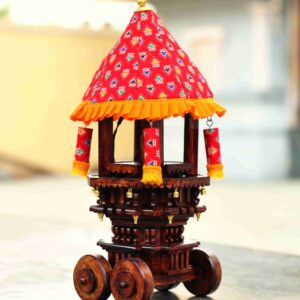
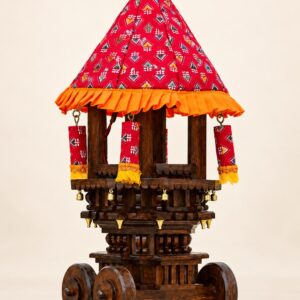
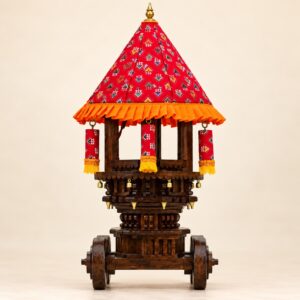
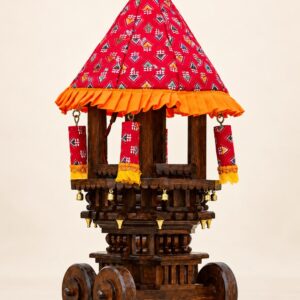
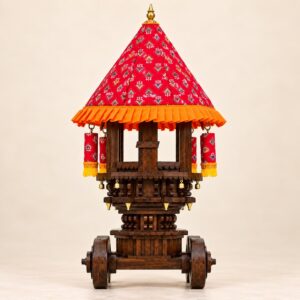
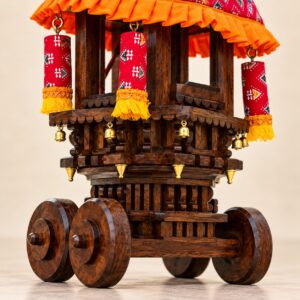
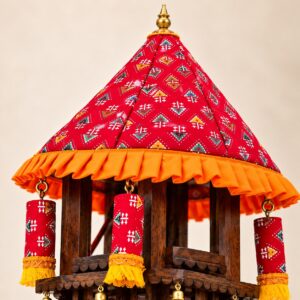
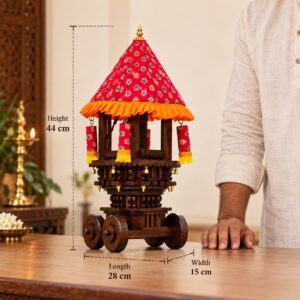
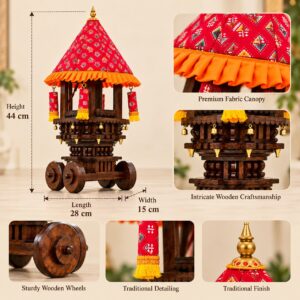
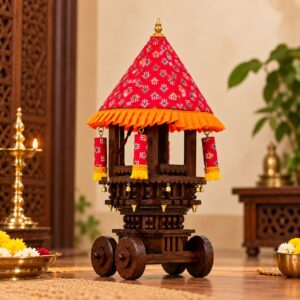
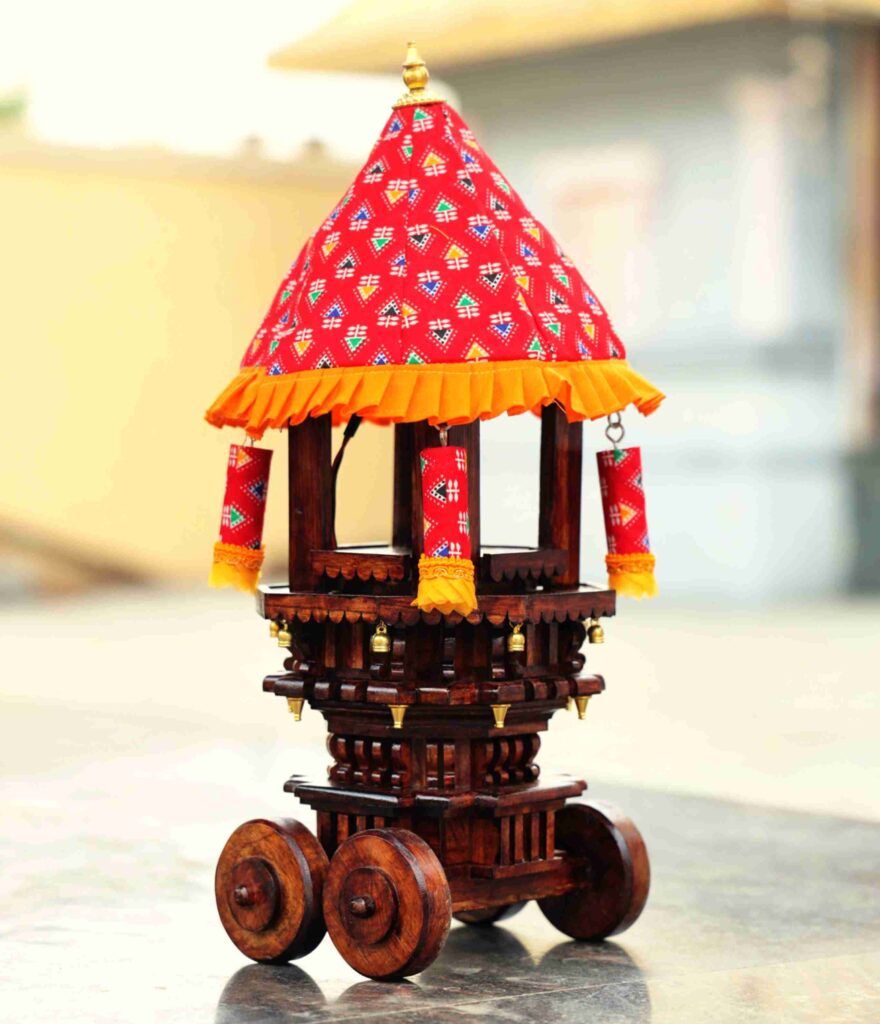
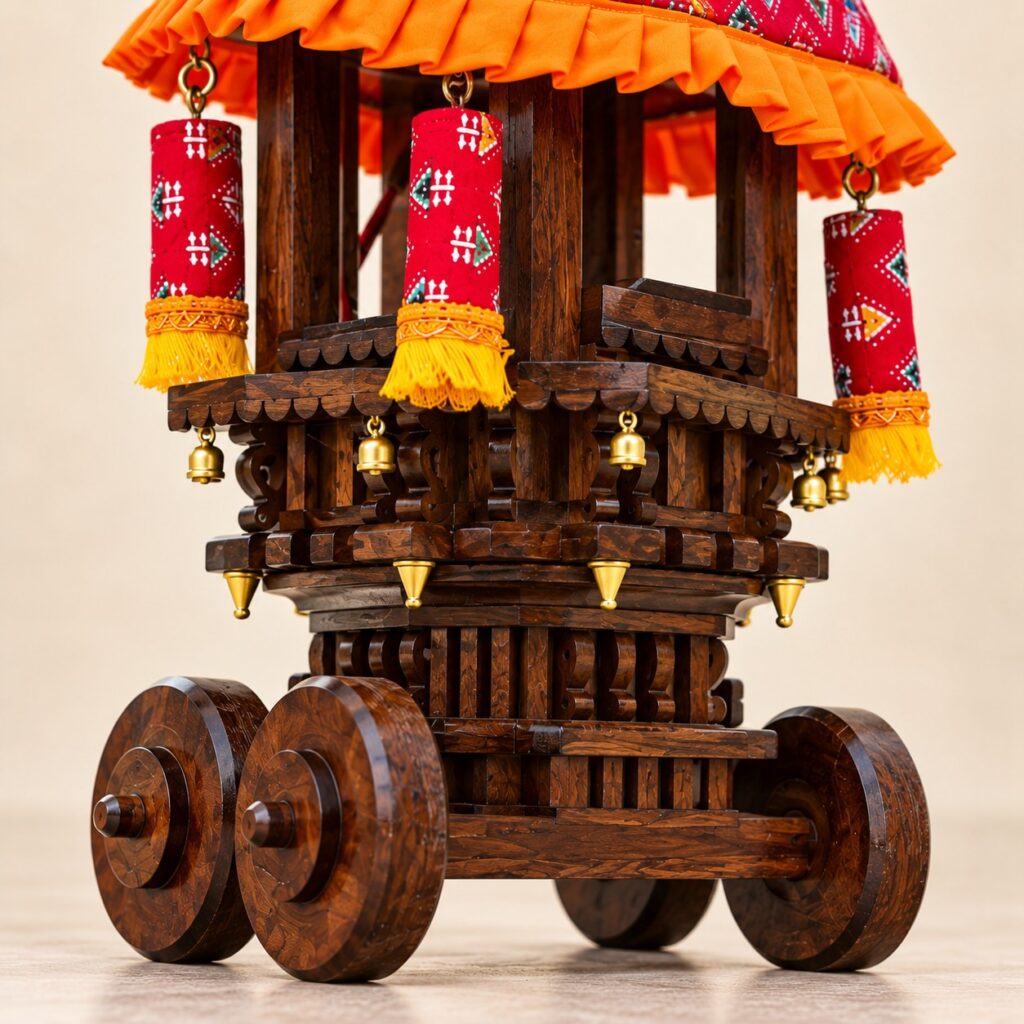
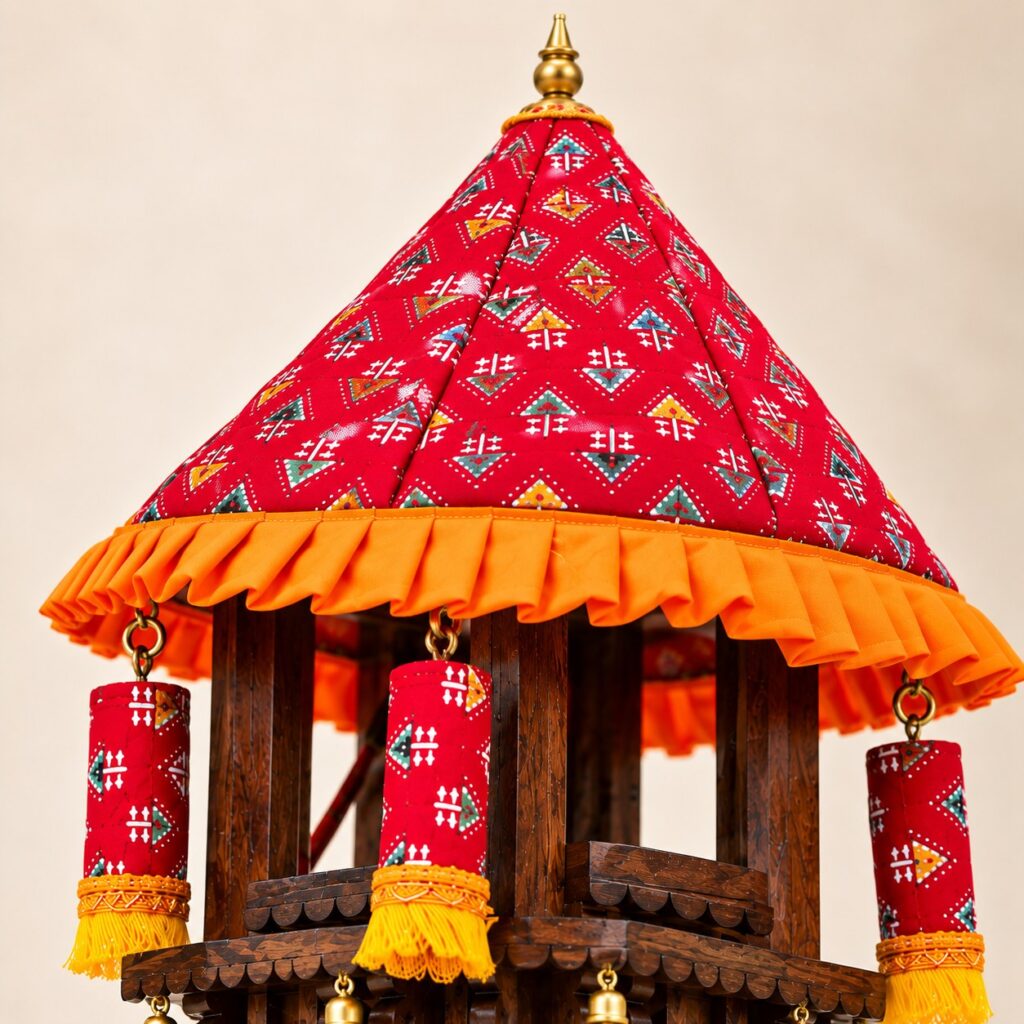
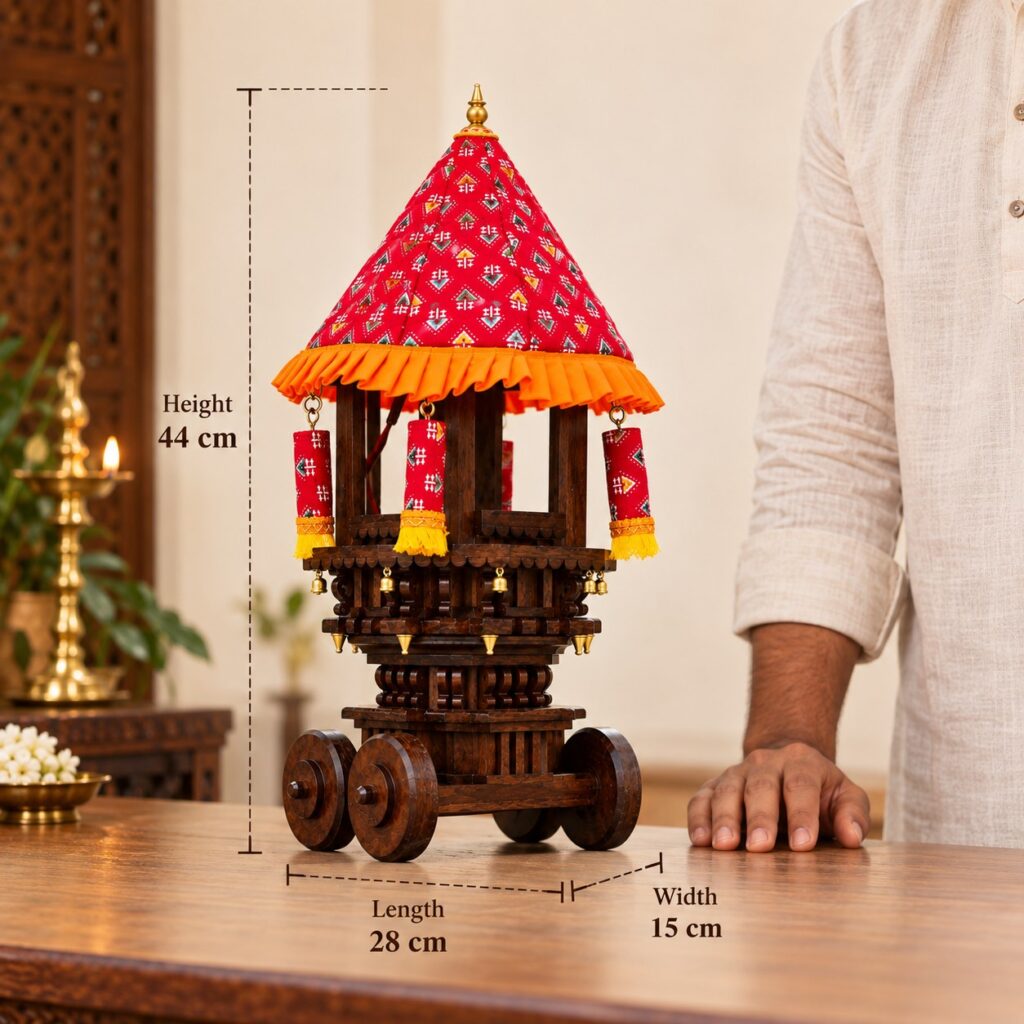
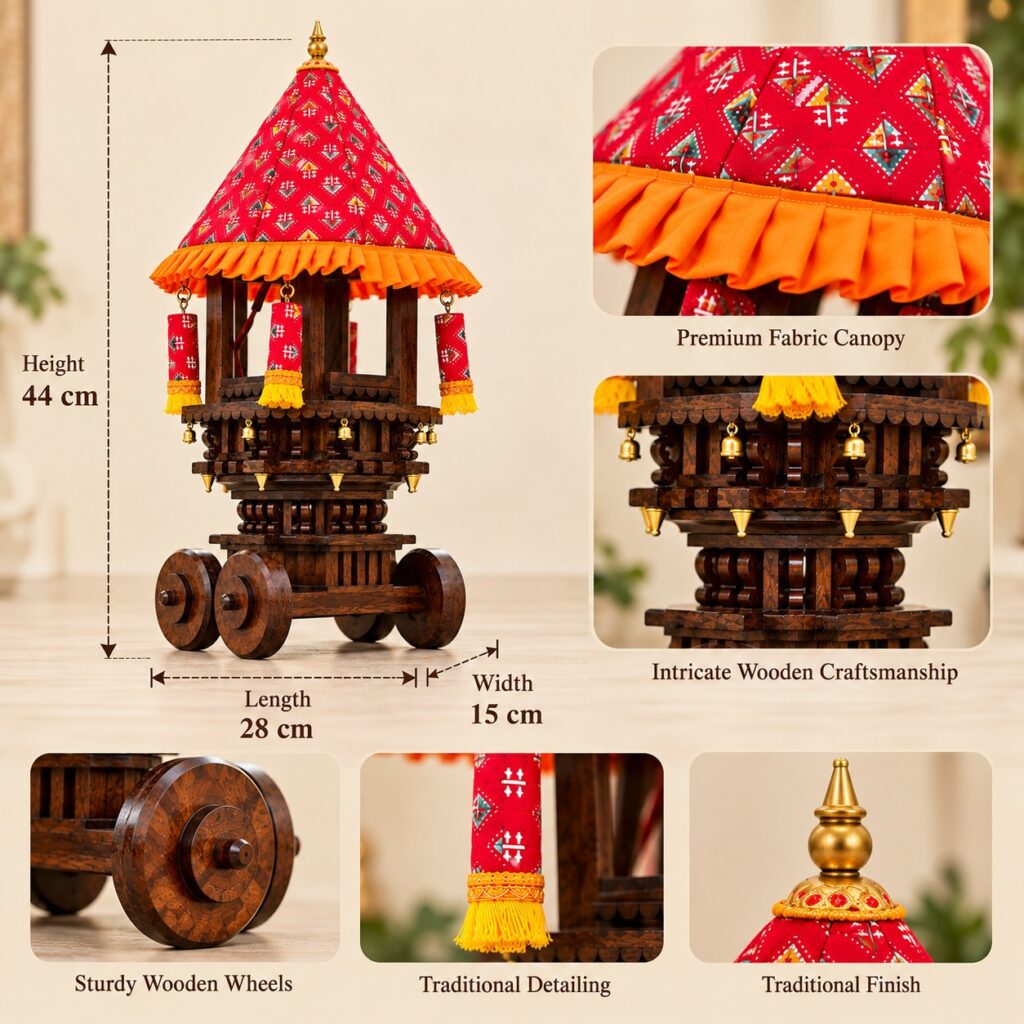
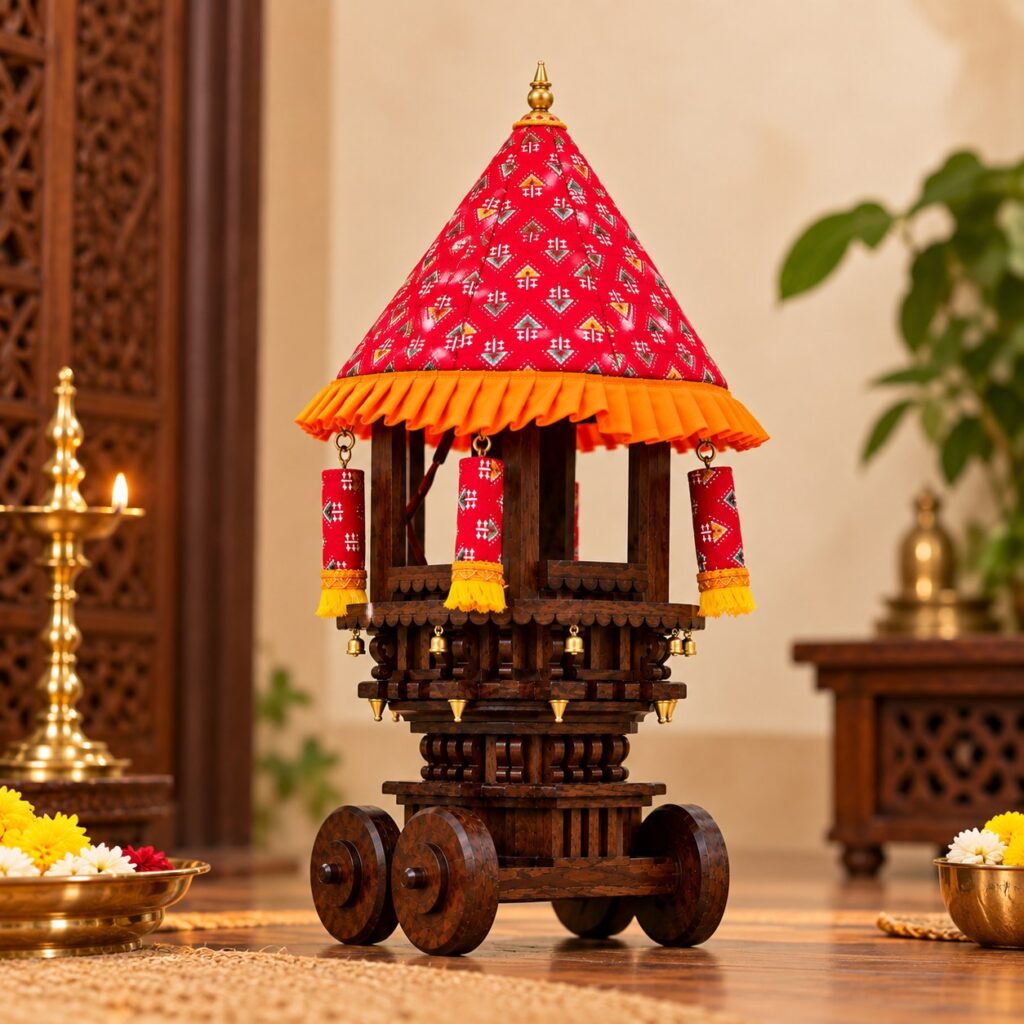
Wooden Temple Chariot Rath
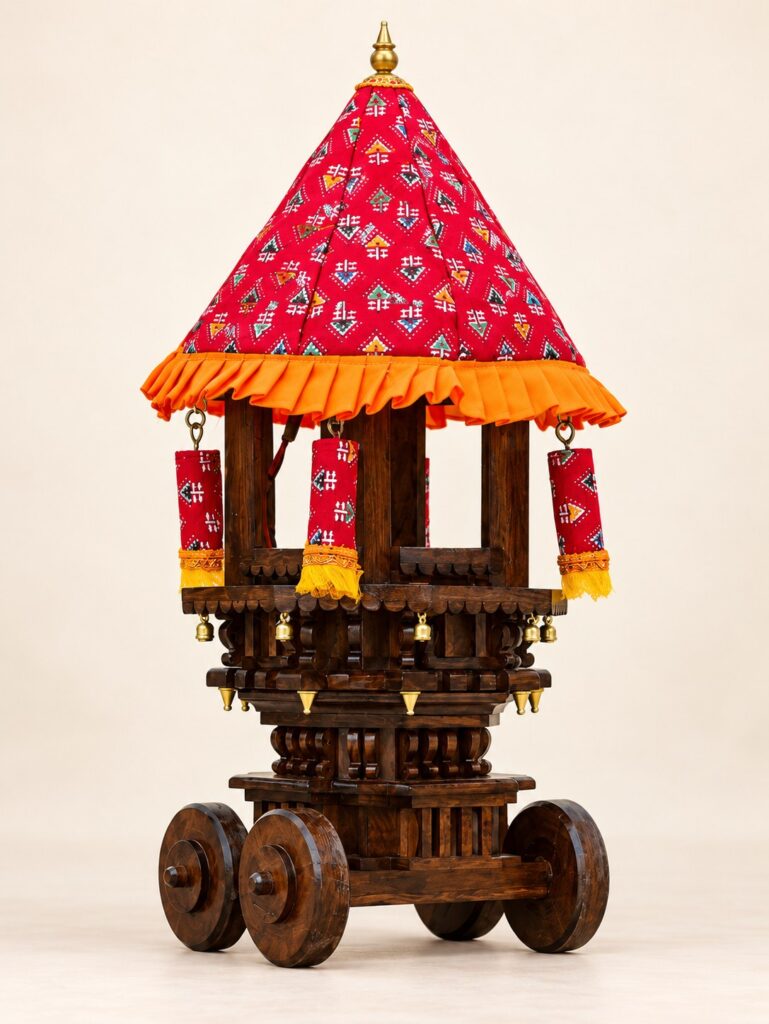
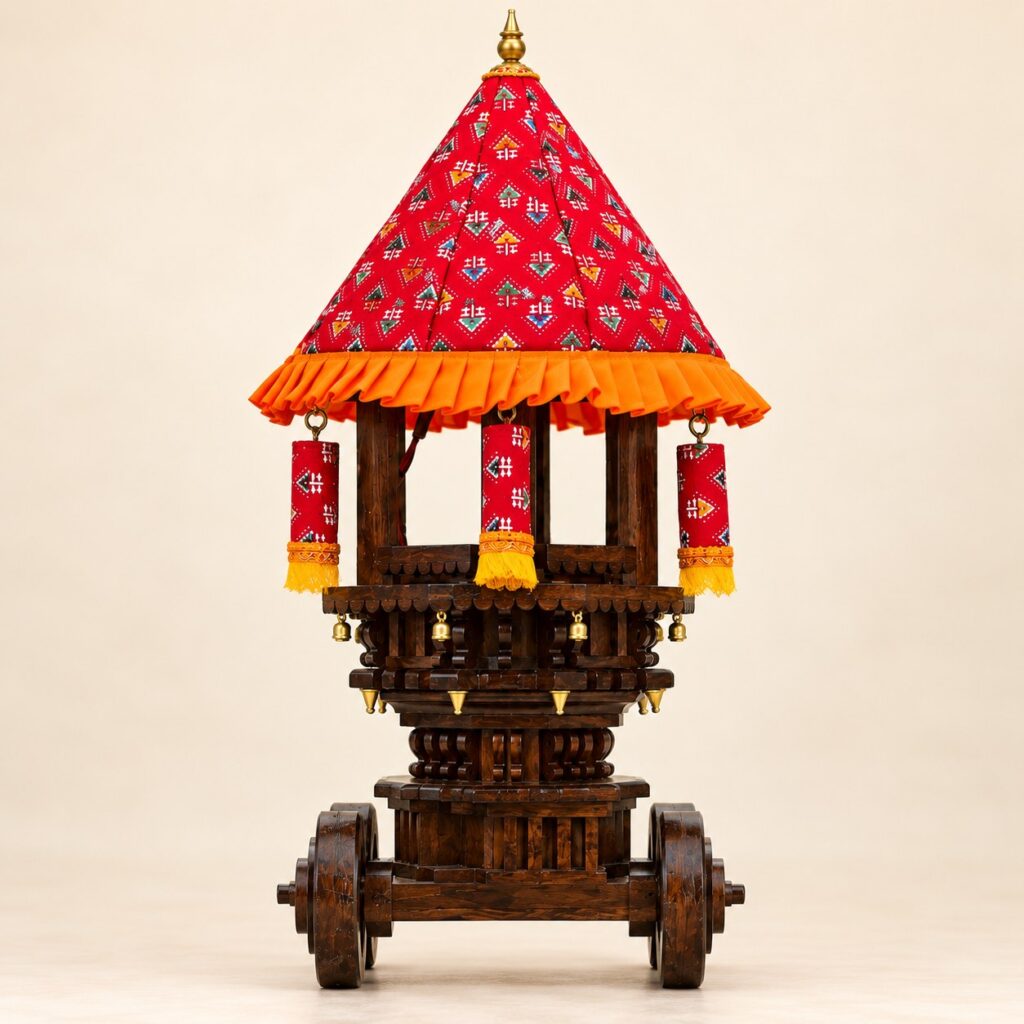
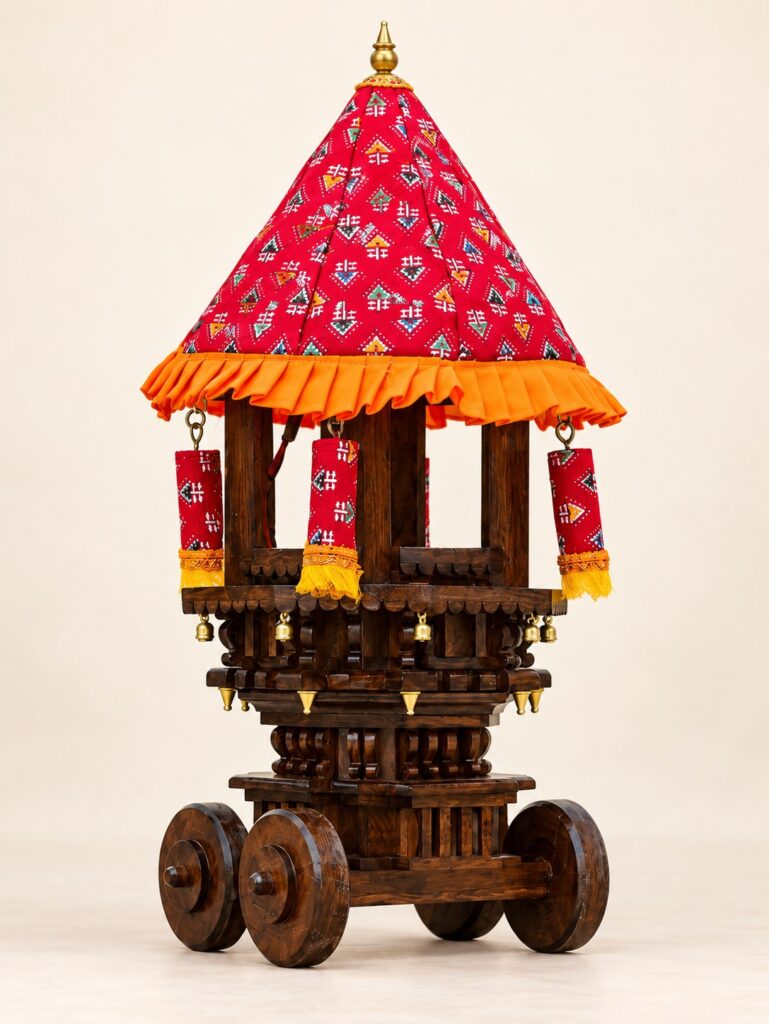
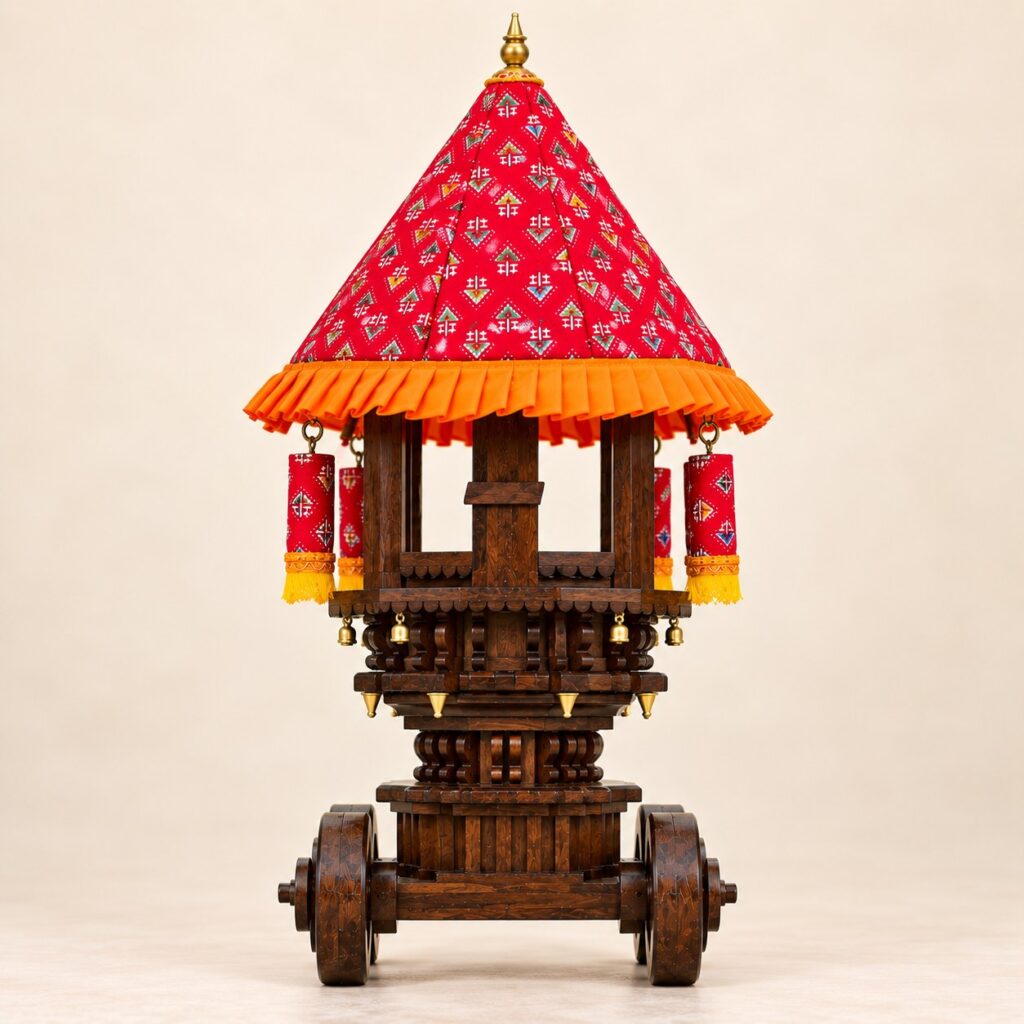
Bring the grandeur of traditional temple heritage into your home with this exquisitely handcrafted Wooden temple chariot Rath.
A temple chariot is commonly called a ther in Tamil and is also known as a temple car or temple chariot.
It is a large processional structure used during temple festivals to carry a representation of a deity along a prescribed route around the temple and surrounding streets.
Traditional South Indian temple cars generally have:
- A large wooden wheeled base
- Elaborately carved wooden panels
- Multiple structural levels
- Architectural and decorative elements
- Sculptural representations
- A platform for the processional deity
Historical examples demonstrate that temple chariots were substantial works of traditional woodworking rather than simple platforms mounted on wheels.
The Historical Roots of South Indian Temple Chariots
The word ratha has a much older history in South Asian literature, but ancient chariots and the large wooden temple cars seen in later South Indian festivals should not automatically be treated as the same object.
Early references to chariots generally describe different types of vehicles from the enormous multi-wheeled temple cars that developed later.
The modern temple-car tradition is better understood as part of a long evolution of sacred and ceremonial procession.
Over time, the chariot became associated with religious festivals, ceremonial movement and the public expression of devotion.
This distinction matters because the history of the South Indian temple chariot is not simply a story of an ancient war chariot becoming larger. It is a history of how the idea of ceremonial movement developed into a distinctive temple tradition.
Temple Architecture on Wheels
One of the defining features of South Indian temple chariots is their architectural character.
A traditional ther is not merely a wooden vehicle. Its upper structure can resemble a miniature temple, with different levels, pillars, decorative details and sculptural panels.
Carved surfaces may feature:
- Hindu deities
- Yalis and makaras
- Mythical animals
- Ganas
- Dancers
- Floral motifs
- Religious narratives
- Architectural patterns
The result is a striking combination of architecture and movement.
A useful way to understand the visual character of a temple chariot is:
A temple structure transformed into a moving festival space.
The craftsmanship makes the chariot visually connected to the temple while its movement extends that presence into the surrounding streets.
Why Temple Chariots Are Pulled Through the Streets
The procession is central to the cultural meaning of a temple chariot festival.
The deity’s processional image leaves the temple complex and moves through the surrounding streets, allowing the wider community to participate in the celebration.
Devotees gather along the route, participate in prayers and festivities, and help pull the enormous wooden structure.
The physical act of pulling the chariot also creates collective participation. Moving such a large structure requires coordination and shared effort.
This means the journey is not simply about transporting the deity from one point to another.
The procession itself is an important part of the tradition.
Temple Chariots and Community Life in Tamil Nadu
The cultural significance of ther festivals in Tamil Nadu extends beyond the physical chariot.
A large temple car can bring together large numbers of people around a shared celebration. Streets become gathering spaces, and the festival temporarily changes the everyday rhythm of the town.
The scale of the chariot reinforces this sense of participation.
People have to work together to move it, while the festival creates opportunities for collective prayer, celebration and cultural expression.
This is one reason temple chariot traditions continue to matter even in modern communities where transportation and technology have changed dramatically.
The purpose of the ther was never simply efficiency.
Its value lies partly in the fact that people experience the journey together.
Traditional Wood Carving on South Indian Temple Chariots
The carved wooden surfaces are among the most remarkable aspects of Tamil Nadu temple chariots.
A single chariot can contain extensive sequences of carved panels. These may represent religious figures, mythical creatures, dancers, floral patterns and scenes associated with traditional stories.
This makes the chariot a large-scale example of traditional Indian wood sculpture.
The visual richness also means that the chariot can be studied from several perspectives at once:
Religious object + architectural structure + wooden sculpture + storytelling surface.
The carving is not simply added decoration. It forms an important part of the chariot’s visual identity.
The Traditional Artisans Behind a Temple Chariot
The making of a temple chariot requires considerably more than carving skill.
Traditional craftsmen need knowledge of:
- Wood selection
- Structural construction
- Joinery
- Weight distribution
- Wheel construction
- Carving
- Architectural proportions
- Assembly
- Repair and maintenance
This combination of structural and artistic knowledge is what makes traditional temple-car craftsmanship particularly valuable.
The artisan has to think about both how the object looks and how the structure functions.
That relationship between form, material and construction is especially relevant when appreciating traditional Indian wooden décor today. A carved wooden object is not only about surface appearance; the material, proportions, joints and craftsmanship all contribute to the final piece.
Stories Carved Into Tamil Temple Chariots
A temple chariot can also function as a moving visual storytelling surface.
Its carved panels may communicate familiar religious narratives through:
- Deities
- Mythological figures
- Symbolic creatures
- Dancers
- Floral designs
- Narrative scenes
As the chariot moves through the streets, these carvings move with it.
For people watching the procession, the chariot can therefore be experienced simultaneously as a vehicle, shrine, sculpture and visual narrative.
This connection between storytelling and craftsmanship is one of the reasons temple chariots remain important examples of South Indian cultural heritage.
The Ther Tradition in Tamil Nadu
Tamil Nadu is particularly associated with large wooden temple chariots and ther festivals.
Different temple towns have developed their own traditions around annual chariot processions, making the ther part of local cultural identity.
One of the best-known examples is the Sri Thyagarajaswamy Temple in Thiruvarur, whose large annual chariot festival is closely associated with the town.
The Thiruvarur chariot, known as the Aazhi Ther, carries the processional deity through the surrounding streets while devotees participate in pulling the massive structure.
The importance of such a festival demonstrates how a wooden chariot can become more than an object belonging to a temple. It can become part of the identity and annual rhythm of an entire town.
The Cultural Significance of the Thiruvarur Chariot
Thiruvarur provides an especially powerful example of the relationship between temple, chariot and community.
The historic temple is associated with the Chola period, while its annual chariot procession continues to be an important event connected with the temple.
As the decorated chariot moves through the streets, the town itself becomes part of the festival environment.
This illustrates an important feature of Tamil Nadu temple chariot culture: sacred activity is not confined to the temple building.
The procession allows the religious celebration to occupy public space and brings the wider community into the experience.
Temple Chariots and Sacred Space in South India
A temple normally has a fixed physical location.
A chariot changes that relationship.
When the processional deity leaves the temple and travels through the streets, the route itself becomes part of the festival landscape.
The streets are therefore not simply transportation routes. During the procession, they become part of a temporary sacred environment created through the interaction of the chariot, deity, devotees, architecture and movement.
This is one of the most distinctive cultural ideas associated with temple-car traditions in South India.
Why Traditional Temple Chariot Craftsmanship Matters
The story of a temple chariot is also the story of the artisans who create, repair and maintain it.
Traditional woodworking knowledge can include techniques that are passed between generations, particularly in communities with long histories of temple craftsmanship.
Preserving the chariot therefore means preserving more than an old wooden structure.
It also means preserving:
- Woodworking knowledge
- Traditional carving techniques
- Structural knowledge
- Architectural skills
- Artistic traditions
- Cultural narratives
- Community memory
The decline of specialised craftsmanship can make preservation increasingly important. Keeping the tradition alive requires attention to both the physical object and the people who understand how it is made and maintained.
How Temple Chariot Craft Inspires Modern Wooden Décor
The influence of South Indian temple craftsmanship can also be appreciated in contemporary handcrafted home décor.
The goal should not be to reproduce an entire temple chariot inside a modern home.
Instead, individual elements can inspire smaller objects:
- Carved wooden surfaces
- Floral motifs
- Traditional architectural details
- Handcrafted forms
- Storytelling through decorative patterns
This creates a bridge between traditional craftsmanship and modern interiors.
For a home décor brand such as Dakshaara, the important connection is the appreciation of Indian craftsmanship, material knowledge and artisan skill.
Traditional inspiration becomes meaningful when it is adapted thoughtfully rather than treated simply as decoration.
What Temple Chariots Teach Us About Indian Craftsmanship
Temple chariots demonstrate an important principle of traditional Indian craftsmanship: beauty and function can exist together.
The chariot has to be structurally capable of movement, but it is also expected to communicate religious and cultural meaning through its form and carving.
That requires artisans to think simultaneously about:
Material + structure + proportion + carving + symbolism + use.
This way of thinking remains relevant to handcrafted wooden home décor today.
A well-made wooden product should not only look attractive. Its material, construction, proportions and finish should also make sense for how it will be used in a home.
Preserving the Temple Chariot Tradition
Preserving South Indian temple chariots requires more than storing historic structures.
Traditional knowledge also needs to remain active.
This includes knowledge of:
- Wood selection
- Carving
- Wheel construction
- Structural repair
- Restoration
- Painting
- Festival preparation
Museums and cultural organisations can help document historic examples, but living craft traditions also depend on artisans who continue to practise and transmit these skills.
In this sense, preservation involves both objects and people.
A chariot may survive physically, but the tradition becomes vulnerable if future generations no longer possess the knowledge required to build, repair and understand it.
From Tamil Temple Craft to the Modern Home
The cultural value of temple chariots does not mean every traditional design needs to be reproduced literally in contemporary interiors.
Instead, homeowners can appreciate the principles behind the craft: detailed woodwork, natural materials, proportion, storytelling and the value of handmade objects.
A smaller handcrafted wooden piece can carry some of that visual language while remaining appropriate for a modern home.
For Dakshaara, this creates a meaningful connection between traditional Indian craftsmanship and contemporary home décor.
The intention is not to turn sacred traditions into ordinary decoration, but to appreciate the skill and cultural references behind Indian craft and bring thoughtfully made pieces into everyday spaces.
Final Thoughts on Temple Chariots in South India
The history and cultural significance of temple chariots in South India is ultimately a story about more than enormous wooden structures.
It is a story about Tamil Nadu’s temple towns, traditional artisans, carved wood, religious festivals and communities coming together.
The chariot transforms architecture into movement. Artisans transform wood into sculpture and visual stories. Devotees transform the procession into a collective experience.
From the ther traditions of Tamil Nadu to temple-car festivals across South India, these structures remain powerful examples of living cultural heritage.
They are not simply objects preserved from the past.
They move through streets, generations and community memory.
At Dakshaara, we believe that connection between craftsmanship, culture and the home is worth preserving and discovering.
Every Piece Builds a Home.
FAQs About South Indian Temple Chariots
What is a temple chariot called in Tamil?
A temple chariot is commonly called a ther in Tamil. The word is associated with the large processional cars used during temple festivals in Tamil Nadu.
What is the purpose of a temple chariot?
A temple chariot carries the processional image of a deity through the streets surrounding the temple during a festival. The procession allows the wider community to participate in the celebration.
What are South Indian temple chariots made of?
Traditional temple chariots are primarily wooden structures with large wheels, structural components and extensively carved wooden panels. Historical examples have used different types of wood depending on the period, location and availability.
What is carved on a Tamil temple chariot?
Carvings can include deities, mythical creatures, dancers, floral motifs, architectural details and scenes associated with religious narratives. The exact designs vary between temples and regions.
Why are temple chariots important to Tamil Nadu?
Temple chariots are connected with Tamil Nadu’s temple festivals, traditional woodcraft and community participation. Some, such as the Thiruvarur Aazhi Ther, have become important symbols of their temple towns.
Which Tamil Nadu temple is famous for its chariot festival?
The Sri Thyagarajaswamy Temple in Thiruvarur is particularly famous for its large annual chariot festival and Aazhi Ther.
How are temple chariots connected with traditional craftsmanship?
Building and maintaining a temple chariot requires knowledge of wood selection, structural construction, joinery, carving, wheel construction, proportions and restoration. The tradition therefore combines artistic and technical skills.
How can temple chariot craftsmanship inspire home décor?
Elements such as carved wood, floral motifs, architectural detailing and handcrafted surfaces can inspire contemporary décor. The idea is to interpret traditional craftsmanship thoughtfully rather than reproduce sacred structures literally.
Leave a Reply