

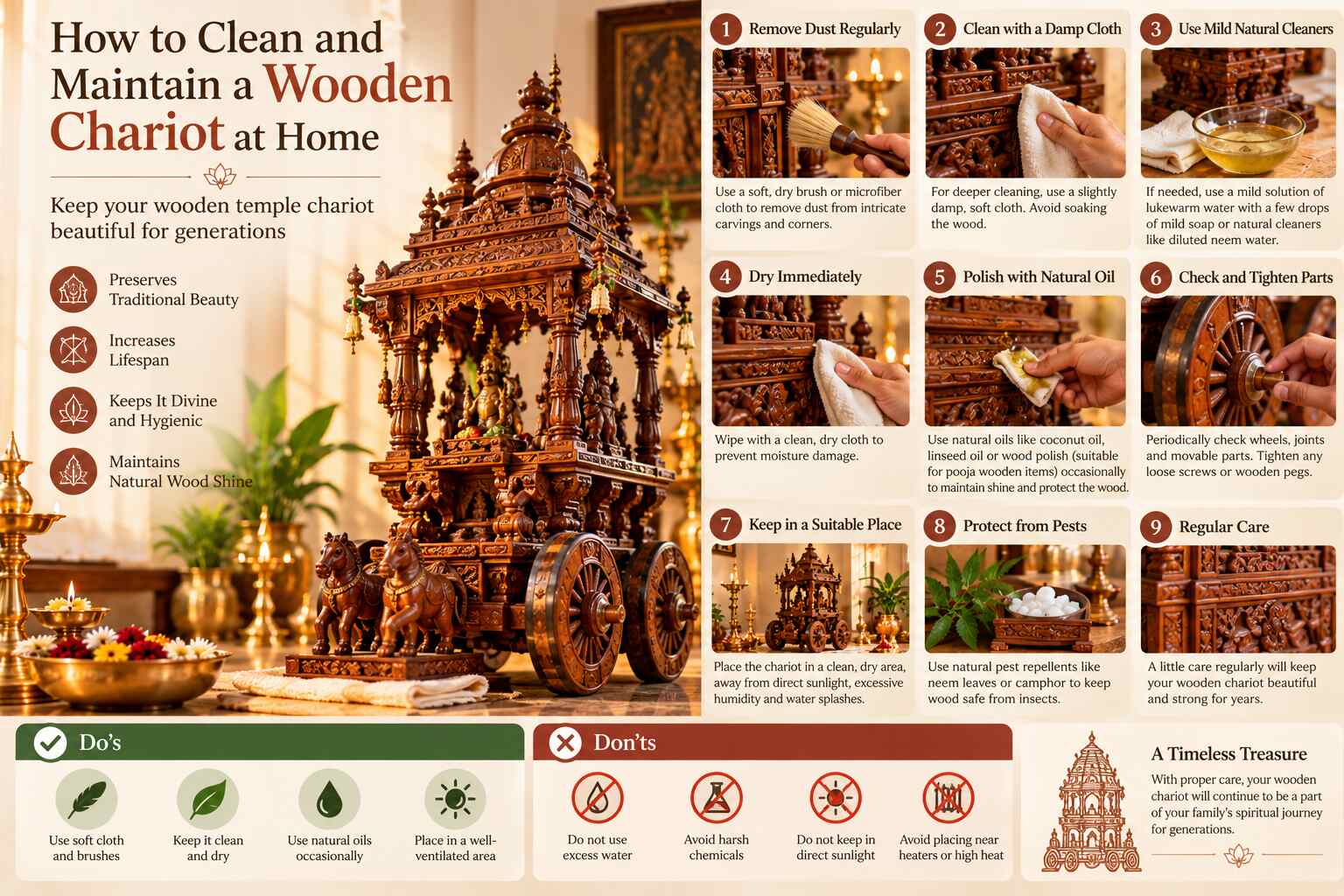

How to clean and maintain a wooden chariot at home depends on its wood, finish, carved details and how the piece is displayed. In Tamil Nadu homes, a handcrafted wooden chariot can complement a pooja space, traditional interior or festive décor, but its detailed carving needs careful maintenance to protect the wood and finish.
Unlike mass-produced décor, a handcrafted wooden piece may have natural variations, intricate carving and finishes that should not be treated with aggressive household cleaners.
The safest approach is simple:
Dust gently. Control moisture. Avoid harsh chemicals. Protect the finish. Inspect the wood. Store it carefully.
Here is a practical maintenance routine for keeping a decorative wooden chariot looking beautiful at home.
Why Does a Wooden Chariot Need Regular Cleaning?
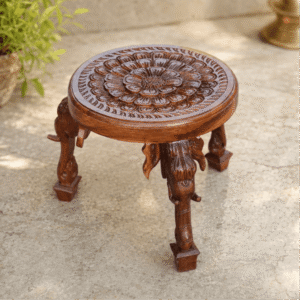
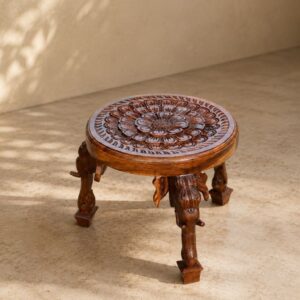
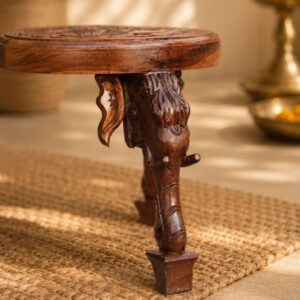
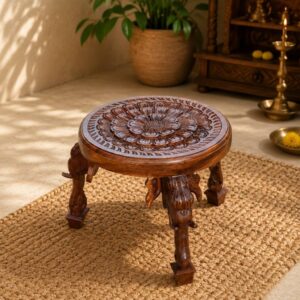
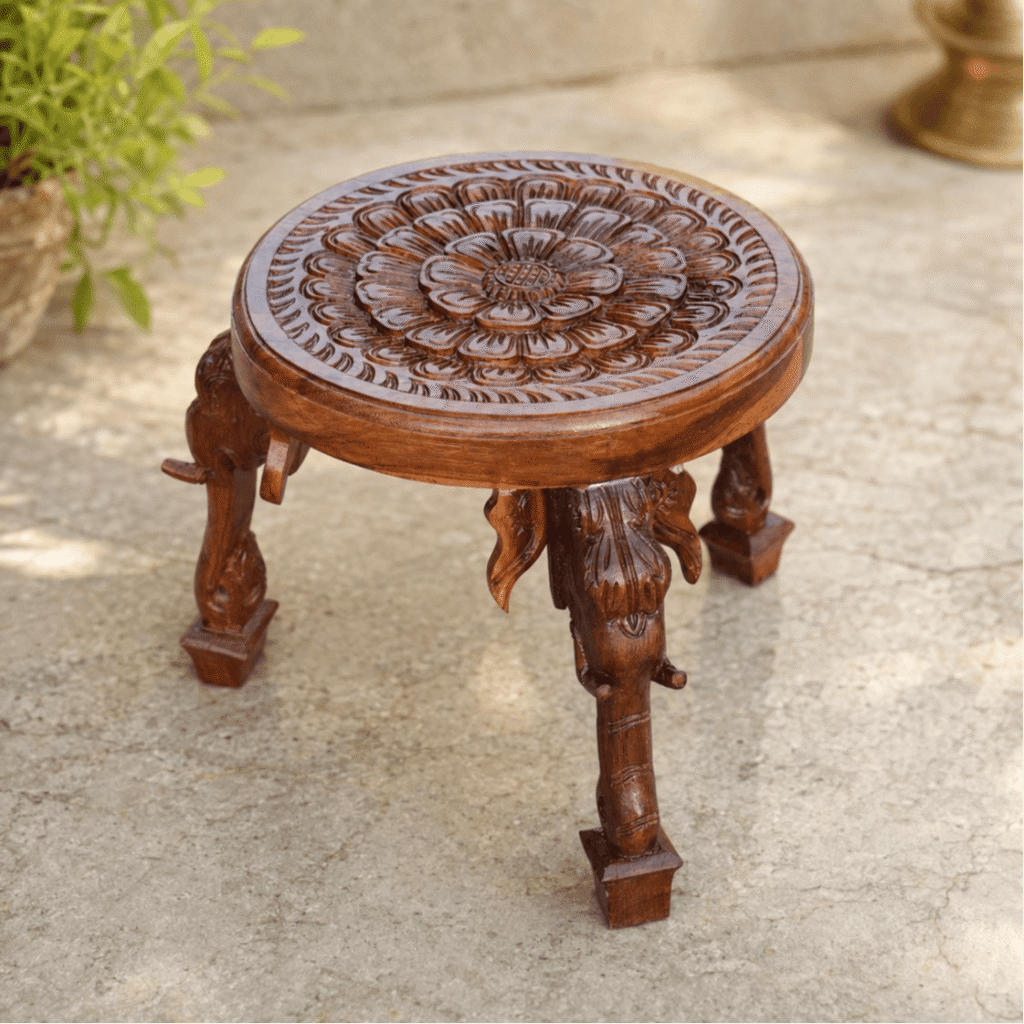
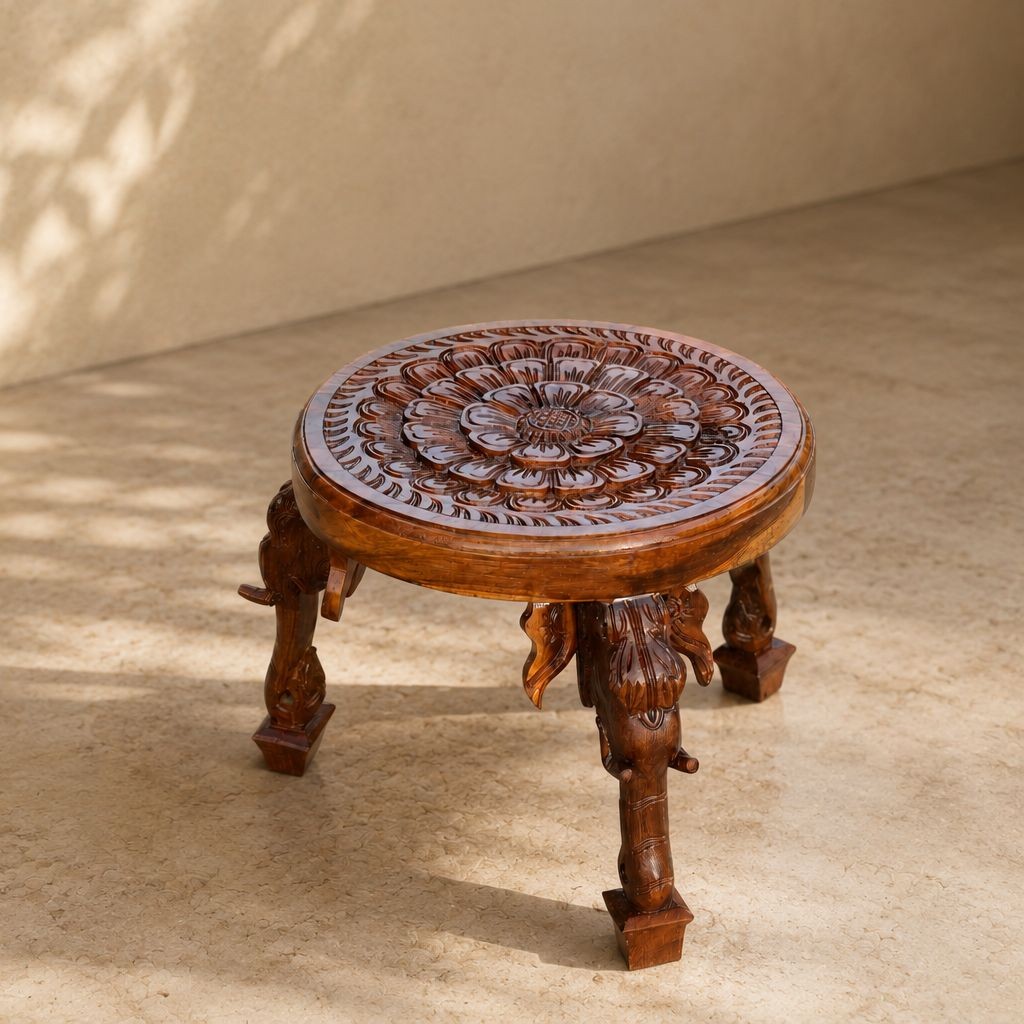
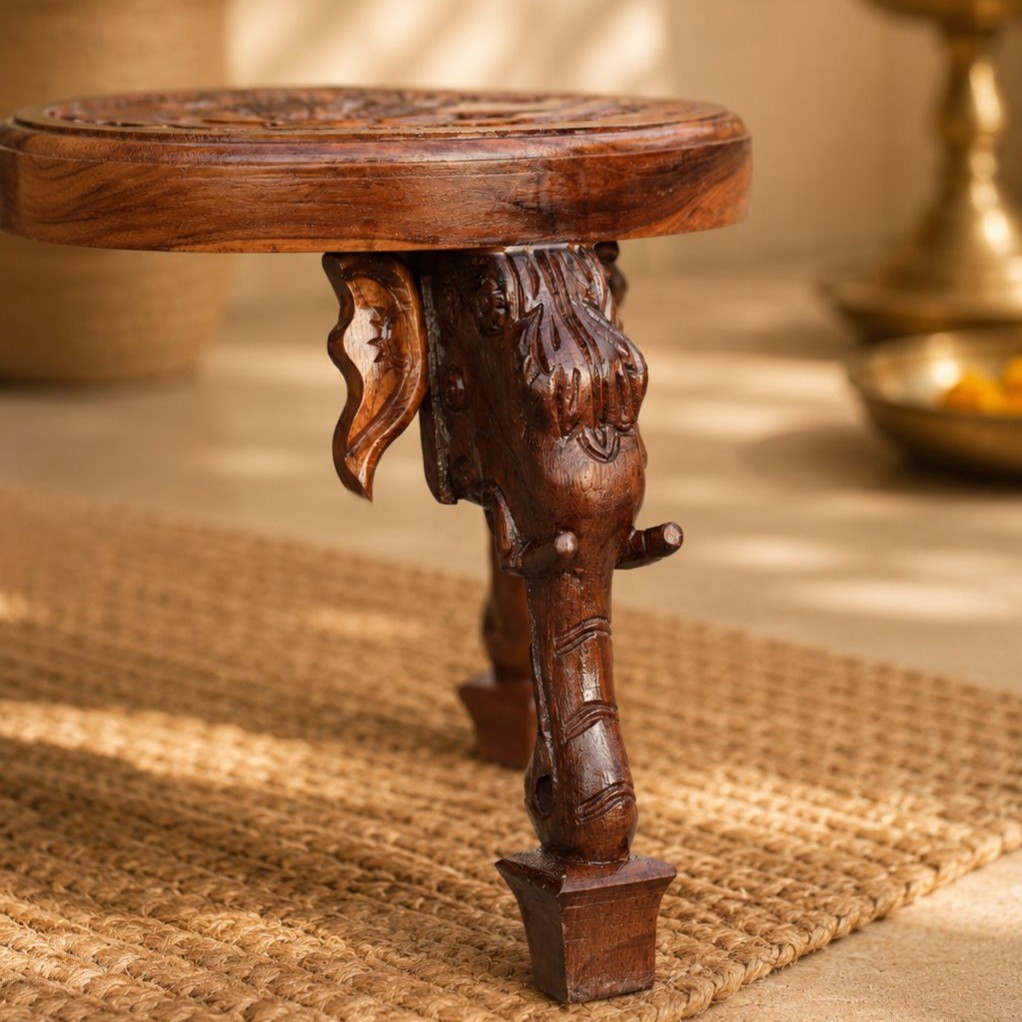
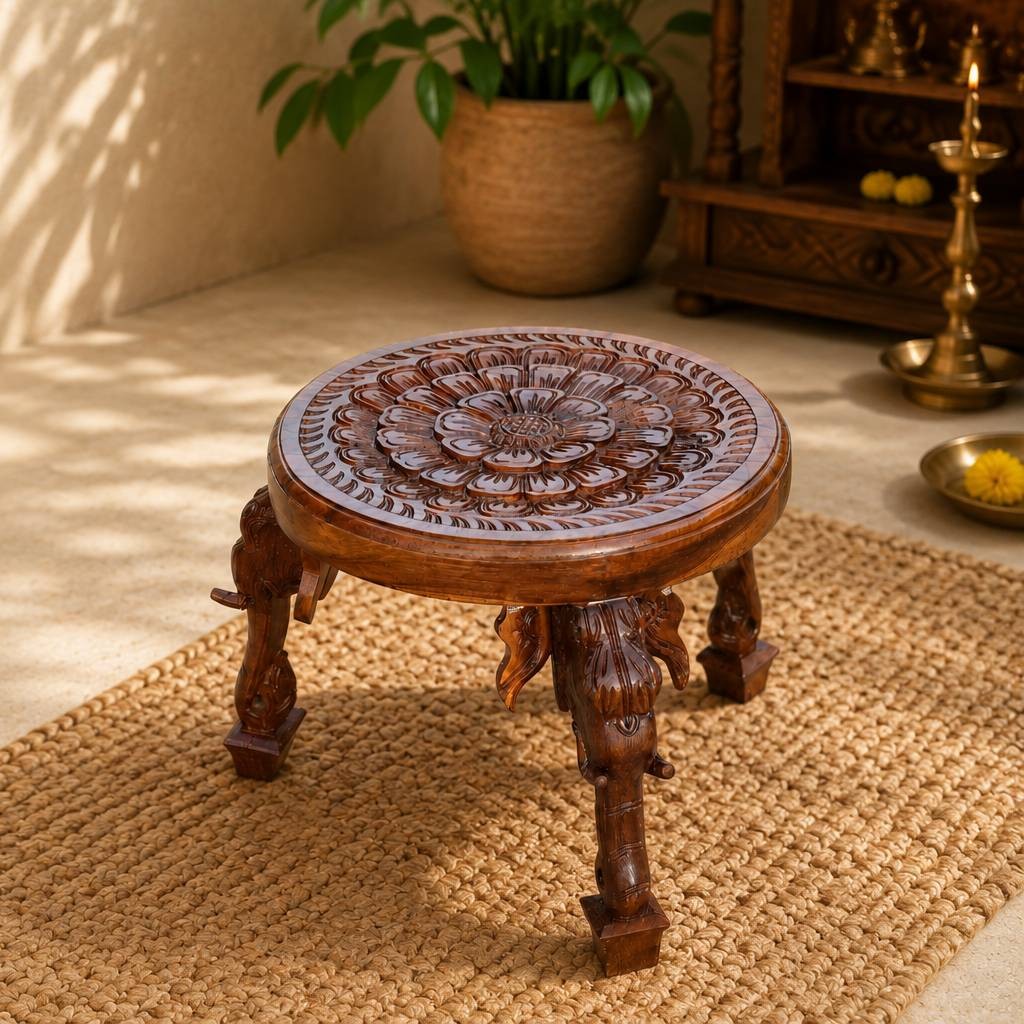
Wooden Stool Mookali
Invoke timeless heritage, grace, and auspicious energy in your home with the Dakshaara Hand-Carved Teak Wood Stool (Mookali),
Wood is a natural material that can respond to changes in moisture, temperature and its surrounding environment.
A carved wooden chariot can collect dust in:
- Decorative panels
- Carved grooves
- Corners
- Wheel details
- Raised patterns
- Joints and edges
Leaving dust untouched for long periods can make detailed areas harder to clean.
For this reason, regular gentle dusting is usually better than occasional aggressive cleaning.
1. Check the Wood and Finish Before Cleaning
Before cleaning your wooden chariot, find out what type of wood and finish it has if that information is available.
The surface may have:
- Paint
- Polish
- Wax
- Protective coating
- Natural finish
- Decorative treatment
A cleaning method that works on one finish may damage another.
If your artisan or seller provided care instructions, follow those first.
If you do not know the finish, begin with the least aggressive method: gentle dry dusting.
Do not experiment with household chemicals simply because the surface looks dull.
2. Dust the Wooden Chariot Regularly
For everyday maintenance, dry dusting should usually be your first step.
Use:
- A soft microfiber cloth
- A soft cotton cloth
- A soft-bristled brush
Use the cloth gently on broad surfaces and a soft brush for detailed carvings.
Avoid pressing hard into the wood. The purpose is to remove surface dust without wearing down the finish or disturbing delicate decorative details.
For a heavily carved chariot, work slowly rather than trying to clean every section in a hurry.
3. Clean Carved Wooden Details Carefully
The carved areas are often the most visually distinctive part of a traditional wooden chariot.
They are also where careless cleaning can cause problems.
Avoid:
- Hard brushes
- Abrasive sponges
- Rough cloth
- Sharp objects
- Aggressive scrubbing
A soft-bristled brush can loosen dust from narrow grooves without forcing a cloth into delicate carving.
A useful cleaning sequence is:
Top → carved panels → sides → base → wheels
This prevents loosened dust from settling back onto areas you have already cleaned.
4. Avoid Excess Water on Wooden Chariots
One of the most important wooden chariot care tips is to control moisture.
Do not pour water over the piece or attempt to wash it like a plastic or metal object.
Avoid:
- Soaking the wood
- Wet scrubbing
- Leaving water on the surface
- Spraying water directly onto the chariot
Depending on the wood and finish, excess moisture can contribute to swelling, staining or surface damage.
For routine dust and light maintenance, dry cleaning is generally the safer starting point.
5. Use a Damp Cloth Only When Appropriate
Some finished wooden surfaces may tolerate light damp cleaning, but this depends entirely on the material and finish.
If the maker’s instructions permit damp cleaning:
- Use a soft cloth.
- Make it only slightly damp.
- Wipe gently.
- Do not allow water to collect.
- Dry the surface immediately.
If you are uncertain, test the method on a small, hidden area first.
For valuable or highly detailed handcrafted pieces, asking the maker for care instructions is better than guessing.
6. Avoid Harsh Cleaning Chemicals
A wooden chariot does not automatically need furniture polish or household cleaning spray.
Avoid using products such as:
- Bleach
- Strong detergents
- Bathroom cleaners
- Glass cleaners
- Abrasive cleaners
- Alcohol-based cleaners
- Unverified wood treatments
These products can affect the colour, finish or protective coating.
The goal of wooden décor maintenance is not necessarily to make the surface extremely shiny. It is to preserve the material and finish that the artisan originally created.
7. Do Not Apply Oil Without Checking the Finish
One common mistake in caring for wooden décor is assuming that oil is always beneficial.
It is not.
Different woods and finishes react differently to oils, waxes and polishes. An unsuitable product may leave residue, alter the colour or interfere with an existing protective coating.
Therefore, do not automatically apply:
- Coconut oil
- Cooking oil
- Furniture polish
- Wax
- Homemade wood treatments
Use a wood-care product only when it is appropriate for the particular finish and recommended by the maker or a qualified professional.
8. Protect the Wooden Chariot From Moisture
Where you display the chariot matters almost as much as how you clean it.
Keep it away from:
- Water splashes
- Damp walls
- Condensation
- Excessive humidity
- Areas directly beside sinks
- Locations where water regularly reaches the wood
For homes in Tamil Nadu, particularly during humid or rainy periods, avoid tightly enclosing a wooden chariot where moisture cannot escape.
Allow reasonable air circulation around the piece.
9. Protect the Chariot From Strong Direct Sunlight
Prolonged exposure to strong direct sunlight can affect some wood surfaces and finishes.
Depending on the material, it may contribute to:
- Fading
- Colour changes
- Uneven appearance
- Changes in certain finishes
You do not need to keep the chariot in darkness.
Instead, choose indirect or filtered light where possible, particularly if the piece has painted or darker decorative surfaces.
10. Inspect the Wooden Chariot Regularly
Cleaning is only one part of wooden chariot maintenance.
Every few months, inspect the piece carefully.
Look for:
- Cracks
- Splits
- Loose components
- Damaged carvings
- Finish changes
- Unusual discolouration
- Moisture marks
- Insect activity
- Loose wheels or decorative elements
Finding a small problem early can make repair easier.
If you notice structural damage, avoid using ordinary household glue on an important handcrafted piece. Contact the artisan, manufacturer or a qualified wood-restoration professional.
How to Clean a Small Wooden Chariot at Home
If your chariot is a decorative piece rather than a large traditional structure, the maintenance routine can remain simple.
Regular dusting
Use a soft cloth to remove surface dust.
Detailed cleaning
Use a soft brush around carvings, corners and decorative grooves.
Periodic inspection
Check for cracks, loose parts, moisture marks or changes in the finish.
Seasonal maintenance
Before storing the piece for an extended period, remove decorations, dust it carefully and make sure it is completely dry.
This is generally more useful than repeatedly performing aggressive deep cleaning.
How to Maintain a Wooden Chariot During Festive Use
A wooden chariot may receive more handling when it is used for Janmashtami, pooja décor or other festive displays.
Before decorating it:
- Check that it is stable.
- Inspect joints and decorative components.
- Remove accumulated dust.
- Place it on a stable surface.
- Make sure decorative materials do not rub against the wood.
If you add flowers or fabric, avoid strong adhesive tapes or permanent glue that could damage the finish.
Use removable decoration methods whenever practical.
Be Careful With Diyas and Open Flames
This is particularly important when a wooden chariot is used as part of a pooja or festive arrangement.
Wood is combustible.
Do not place a burning diya directly on ordinary wood unless the complete product has specifically been designed and rated for safe open-flame use.
Instead, consider:
- A suitable non-combustible diya holder
- A properly designed lamp stand
- A safe distance between flame and wood
- Battery-operated LED diyas for decorative displays
Keep flowers, fabric and paper decorations away from flames as well.
Never leave an open flame unattended.
How to Store a Wooden Chariot Safely
If your wooden chariot is used seasonally, storage is an important part of preserving it.
Before storing:
- Remove all flowers, fabric and decorations.
- Dust the complete piece.
- Make sure the wood is completely dry.
- Inspect it for cracks or loose components.
- Use suitable breathable protective material where appropriate.
- Store it in a clean, dry location.
- Avoid placing heavy objects on top.
Avoid tightly sealing a wooden object in plastic for long periods if the environment could trap moisture.
The storage area should be reasonably dry, stable and protected from pests.
Should You Cover a Wooden Chariot With Plastic?
A cover can protect the chariot from dust, but long-term storage needs more consideration.
A tightly sealed plastic covering may trap moisture around the wood.
For extended storage, a breathable protective covering can be preferable depending on the product and environment.
For antique, valuable or historically significant wooden pieces, professional conservation advice is safer than experimenting with household storage methods.
How to Protect a Wooden Chariot From Insects
Wood can be vulnerable to certain wood-boring insects.
Inspect the chariot for:
- Small holes
- Fine powder near the wood
- Unexpected surface damage
- Repeated insect activity
If you notice possible infestation, do not immediately spray household insecticide over the entire piece.
Some chemicals can damage decorative finishes.
For a valuable handcrafted chariot, consult a professional pest-control or wood-restoration specialist who can identify the problem and recommend an appropriate treatment.
Common Wooden Chariot Cleaning Mistakes
Using too much water
Excess moisture can affect some types of wood and finishes.
Scrubbing carved details
Hard brushes and aggressive pressure can damage delicate surfaces.
Using household cleaners
Strong chemicals may affect colour or protective finishes.
Applying random oils
Not every finish is compatible with oil or wax.
Storing the piece while damp
Trapped moisture can create problems during long-term storage.
Ignoring small damage
A small crack, loose component or insect problem can become more serious when left untreated.
Wooden Chariot Maintenance Checklist
| Maintenance Task | Recommended Approach |
|---|---|
| Regular dusting | Soft cloth |
| Carved details | Soft-bristled brush |
| Damp cleaning | Only if compatible with the finish |
| Excess water | Avoid |
| Harsh chemicals | Avoid |
| Direct sunlight | Minimise prolonged exposure |
| Moisture | Keep away |
| Open flame | Avoid unless specifically designed for it |
| Insect activity | Inspect and seek professional advice |
| Structural damage | Consult an artisan or specialist |
| Long-term storage | Clean, dry and breathable protection |
When Should You Get Professional Help?
Not every wooden chariot problem should be handled at home.
Consider professional assistance if you notice:
- Structural cracks
- Significant splitting
- Loose major components
- Extensive insect damage
- Serious water damage
- Peeling or damaged finishes
- Major carving damage
- Antique or historically significant craftsmanship
If the piece has considerable cultural, religious or historical value, avoid experimenting with DIY restoration products.
A specialist can assess the wood and finish before recommending a treatment.
Caring for Handcrafted Wooden Décor
A handcrafted wooden chariot represents more than its surface decoration.
Its carving, construction and finish may reflect the work of skilled artisans. That is why good maintenance often means doing less, but doing it carefully.
You do not need to constantly polish the wood.
You do not need strong cleaning chemicals.
You do not need to change its natural appearance.
Regular dusting, careful handling, moisture control and suitable storage can be enough to preserve the character of a handcrafted wooden piece.
Dakshaara’s Approach to Wooden Craftsmanship
At Dakshaara, we believe handcrafted objects deserve to be cared for thoughtfully.
The texture, carving and small natural variations in handmade wood are part of what makes each piece different from mass-produced décor.
Whether the inspiration comes from South Indian temple craftsmanship, traditional architecture or contemporary Indian homes, caring for handmade wood means allowing its craftsmanship to remain visible.
When bringing handcrafted wooden décor into your home, choose pieces thoughtfully and follow the care guidance provided by the artisan or maker.
Every Piece Builds a Home.
Final Thoughts: How to Care for a Wooden Chariot
Knowing how to clean and maintain a wooden chariot at home does not require an elaborate routine.
Start with gentle dusting. Use soft tools around carved areas. Keep the wood away from excessive moisture and prolonged direct sunlight. Avoid unverified chemicals and oils. Inspect the piece periodically and store it carefully when it is not being used.
Most importantly, remember that wood is a natural material.
Its texture, colour and small variations are part of what make handcrafted pieces special.
With thoughtful care, a wooden chariot can remain a beautiful part of your home for years while continuing to showcase the craftsmanship behind it.
Good care does not hide the character of handcrafted wood. It helps preserve it.
FAQs About Cleaning and Maintaining a Wooden Chariot
How often should I clean a wooden chariot?
Light dusting can be done regularly depending on how quickly dust accumulates. Detailed cleaning can be performed periodically using methods suitable for the specific wood and finish.
Can I wash a wooden chariot with water?
Avoid washing or soaking a wooden chariot unless the manufacturer’s care instructions specifically allow it. Excess moisture can damage some wood surfaces and finishes.
What is the best way to clean carved wooden details?
Use a soft-bristled brush to gently remove dust from grooves and carvings. Avoid hard brushes, sharp tools and aggressive scrubbing.
Can I apply coconut oil to a wooden chariot?
Do not apply coconut oil or another treatment simply because the wood looks dry. First confirm that the product is compatible with the particular wood and finish and, ideally, follow the maker’s recommendation.
How should I store a wooden chariot?
Clean and completely dry it before storage. Keep it in a clean, dry environment protected from moisture, strong direct sunlight and pests. Avoid tightly sealing it in plastic for long periods if moisture could become trapped.
How can I protect a wooden chariot from insects?
Inspect regularly for small holes, powder or other signs of wood-boring insects. If you find evidence of infestation, consult a professional instead of applying an unverified chemical treatment yourself.
Can I place a diya on a wooden chariot?
Only if the complete wooden product has specifically been designed and rated for safe open-flame use. Otherwise, keep real flames away from the wood and use a suitable non-combustible holder or LED diya.
Leave a Reply