


Traditional teak wood chariots from Tamil Nadu represent a rare form of Indian craftsmanship that combines cultural heritage, temple artistry, and detailed hand carving. Created by skilled rural artisans, these handcrafted wooden pieces are deeply inspired by South Indian temple architecture and historic ceremonial chariots that have been part of Tamil culture for generations.
Unlike factory-made decorative products, handcrafted teak wood chariots carry intricate detailing, traditional symbolism, and artisan techniques that are difficult to replicate through machine production. Every carving reflects patience, experience, and an understanding of heritage design passed through artisan communities over many years.
Today, these handcrafted creations are becoming increasingly valued by collectors, spiritual decor enthusiasts, and homeowners looking for authentic Indian craftsmanship that holds cultural significance.
The Cultural Importance of Traditional Wooden Chariots
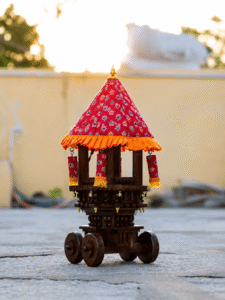
In Tamil Nadu, temple chariots hold strong spiritual and historical importance. During major temple festivals, beautifully carved wooden chariots are used in ceremonial processions that symbolize devotion, celebration, and community tradition.
The miniature teak wood chariots crafted by rural artisans are inspired by these iconic temple structures. The detailing often reflects:
- Traditional South Indian temple architecture
- Mythological symbols
- Floral carving patterns
- Sacred decorative elements
- Historic Tamil craftsmanship styles
These handcrafted pieces are not simply decorative items. They represent a continuation of artistic traditions that have existed in Tamil culture for centuries.
Many customers choose teak wood chariots because they bring both spiritual presence and timeless artistic beauty into homes, pooja rooms, and heritage interior spaces.
Why Teak Wood Is Preferred for Traditional Craftsmanship
Teak wood has long been valued in South Indian craftsmanship due to its durability, strength, and rich natural texture. It is especially suitable for intricate carving work because of its stable grain structure and long-lasting quality.
Rural artisans prefer teak wood for heritage decor products because:
- It supports detailed hand carving
- It has excellent durability
- The natural finish ages beautifully
- It offers premium appearance and strength
- It carries traditional value in South Indian woodwork
Unlike lightweight machine-made materials, teak wood products feel solid, authentic, and heirloom-worthy.
Over time, the wood develops even more character, making handcrafted teak wood decor highly appreciated among buyers who value traditional artistry.
Handmade Teak Wood Mandapams and Their Traditional Appeal
Teak wood mandapams are another important part of South Indian spiritual decor. These handcrafted structures are commonly used in pooja spaces and home temples.
The beauty of handmade mandapams lies in their detailing. Skilled artisans spend significant time carving pillars, arches, borders, and ornamental patterns manually.
Each mandapam reflects:
- Temple-inspired architecture
- Traditional Tamil carving styles
- Symmetrical handcrafted detailing
- Fine finishing and polishing
- Cultural craftsmanship techniques
Because every piece is handmade, slight variations naturally occur, giving each product its own individuality and artisan identity.
Customers increasingly prefer handcrafted mandapams over machine-cut alternatives because handmade work carries visible depth, texture, and craftsmanship quality that machines cannot fully reproduce.
Small Wooden Jhulas and Mukkalis in Traditional Interiors
Along with chariots and mandapams, rural artisans in Tamil Nadu also create handcrafted teak wood Jhulas and mukkalis that reflect traditional South Indian household aesthetics.
Small wooden Jhulas are especially popular in:
- Pooja room setups
- Traditional decor arrangements
- Festival displays
- Krishna-themed decorations
Teak wood mukkalis, known for their simple yet elegant structure, continue to remain part of traditional Tamil interiors. Their handcrafted appearance and durable construction make them suitable for both decorative and practical use.
These smaller handmade products are appreciated because they preserve old-world craftsmanship while fitting naturally into modern homes.
The Uniqueness of Tamil Nadu Wood Carving Traditions
One of the most distinctive aspects of these products is the carving style itself.
The carving techniques used by rural Tamil Nadu artisans are deeply rooted in local temple traditions and regional craftsmanship practices. The patterns, structures, and detailing are often very different from wood carving styles found in other Indian states.
This uniqueness can be seen in:
- Temple-inspired wheel carvings
- Layered ornamental structures
- Traditional deity motifs
- Floral border detailing
- South Indian architectural influence
Because these designs are handcrafted rather than mass-produced, each product carries a unique artisan touch.
This regional identity is one of the strongest reasons why collectors and heritage decor buyers actively seek authentic Tamil Nadu handcrafted wooden products.
Fibre Crafts: Tulsi Maadam, Baby Krishna, and Komatha
In addition to teak wood craftsmanship, artisans also create fibre-based spiritual decor products including:
- Tulsi maadams
- Lord Baby Krishna statues
- Komatha sculptures
These products are designed to combine traditional spiritual symbolism with practical durability.
Fibre crafts are increasingly preferred because they:
- Are lightweight and easy to maintain
- Offer detailed finishing
- Work well for indoor and outdoor use
- Preserve traditional design aesthetics
The artistic focus remains strongly connected to Indian spiritual culture while allowing more flexibility in size, finish, and placement.
Supporting Rural Artisans and Preserving Traditional Skills
One of the biggest challenges faced by traditional artisan communities today is the decline of handcrafted industries due to mass manufacturing.
By supporting handmade teak wood and fibre crafts, customers directly contribute toward:
- Preserving rural artisan livelihoods
- Protecting traditional carving techniques
- Encouraging heritage craftsmanship
- Supporting handmade Indian artistry
- These products are not created in large factories. They are made through manual effort, carving expertise, and years of artisan experience.
That human craftsmanship is what gives these creations long-term cultural and artistic value.
Conclusion
Traditional teak wood chariots from Tamil Nadu showcase a rare blend of heritage, spiritual symbolism, and handcrafted excellence. From intricately carved chariots and mandapams to small Jhulas, mukkalis, and fibre spiritual decor, every product reflects the artistic identity of rural Tamil artisans.
What makes these creations truly special is their authenticity. The carving styles, temple-inspired detailing, and handmade finishing preserve a regional craftsmanship tradition that cannot easily be replicated elsewhere.
As appreciation for handmade Indian decor continues growing, authentic artisan-made products from Tamil Nadu are gaining recognition not only for their beauty, but also for the cultural legacy they help preserve.
– Team Dakshaara
Leave a Reply