


Diwali is the perfect time to give your home a fresh look with flowers, diyas, colourful rangoli and meaningful decorative pieces. If you love traditional Indian interiors, wooden elephants and handcrafted artefacts can add warmth, character and a sense of heritage to your festive arrangements.
Following Diwali home decor Vastu tips can help you decide where to display these decorative pieces while keeping your home organised and welcoming. Whether you live in a spacious house or a compact apartment, the right placement can make your decorations feel intentional rather than cluttered.
From styling the main entrance to arranging wooden showpieces in the living room, here are practical ideas that combine traditional Vastu beliefs with everyday interior decorating advice.
Quick Answer: Where Should You Place Wooden Elephants During Diwali?
According to commonly followed Vastu interpretations, wooden elephant figurines can be placed near the main entrance or in the living room. A pair facing into the home is traditionally associated with welcome and protection, while an elephant with a raised trunk is often linked to prosperity. Keep the display clean, stable and proportionate to the space. These are cultural beliefs, not scientifically established effects.
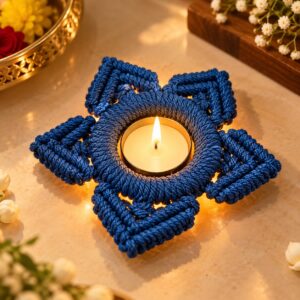
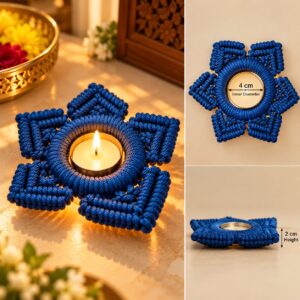
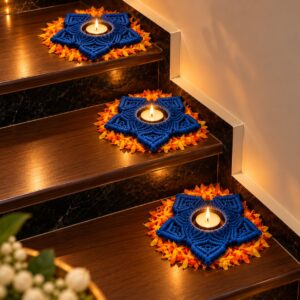
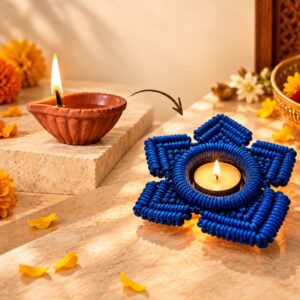
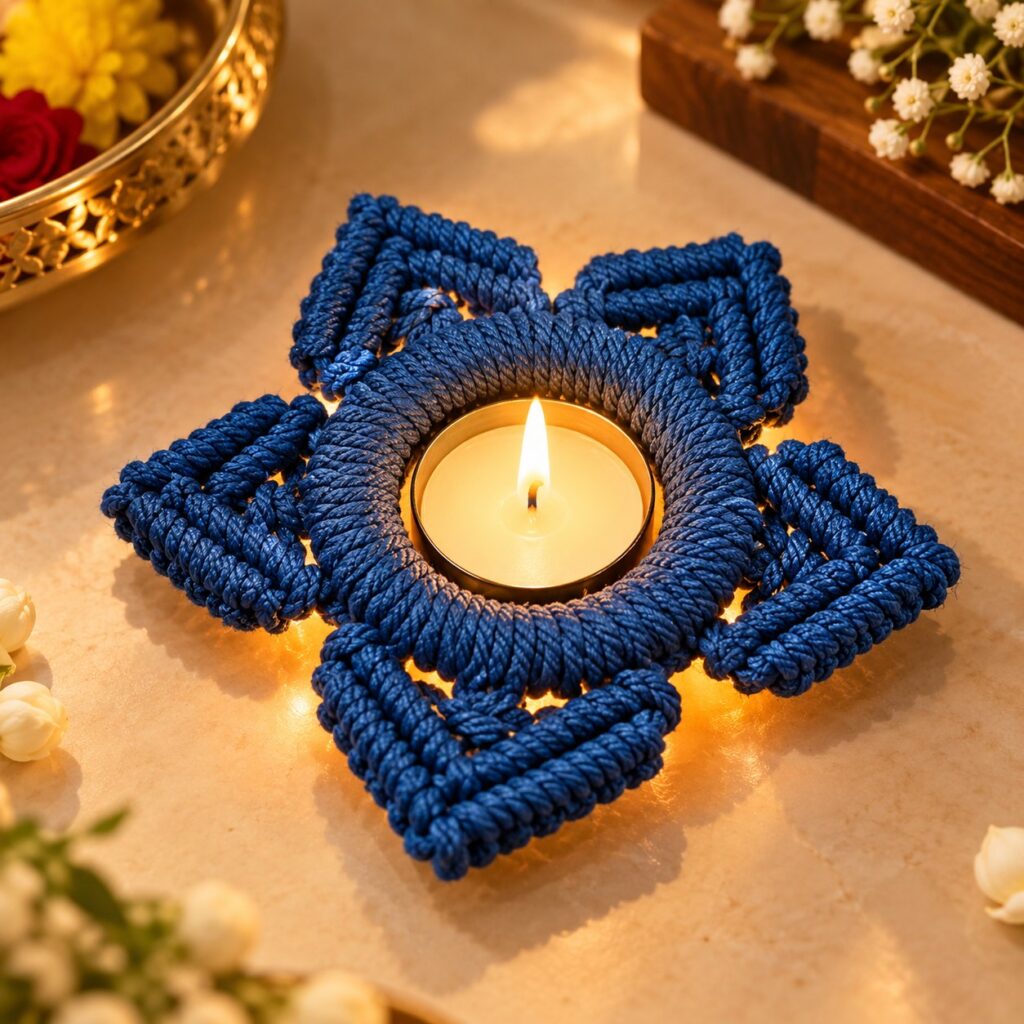
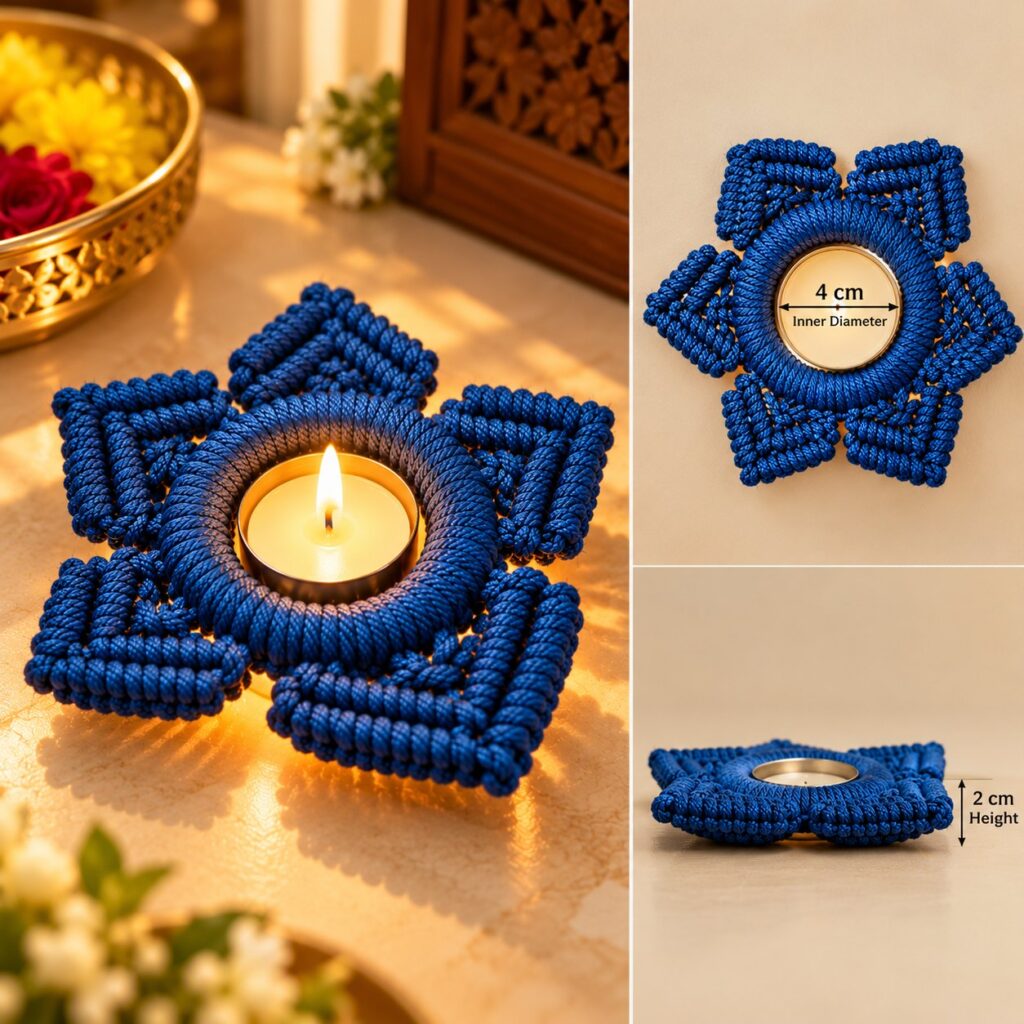
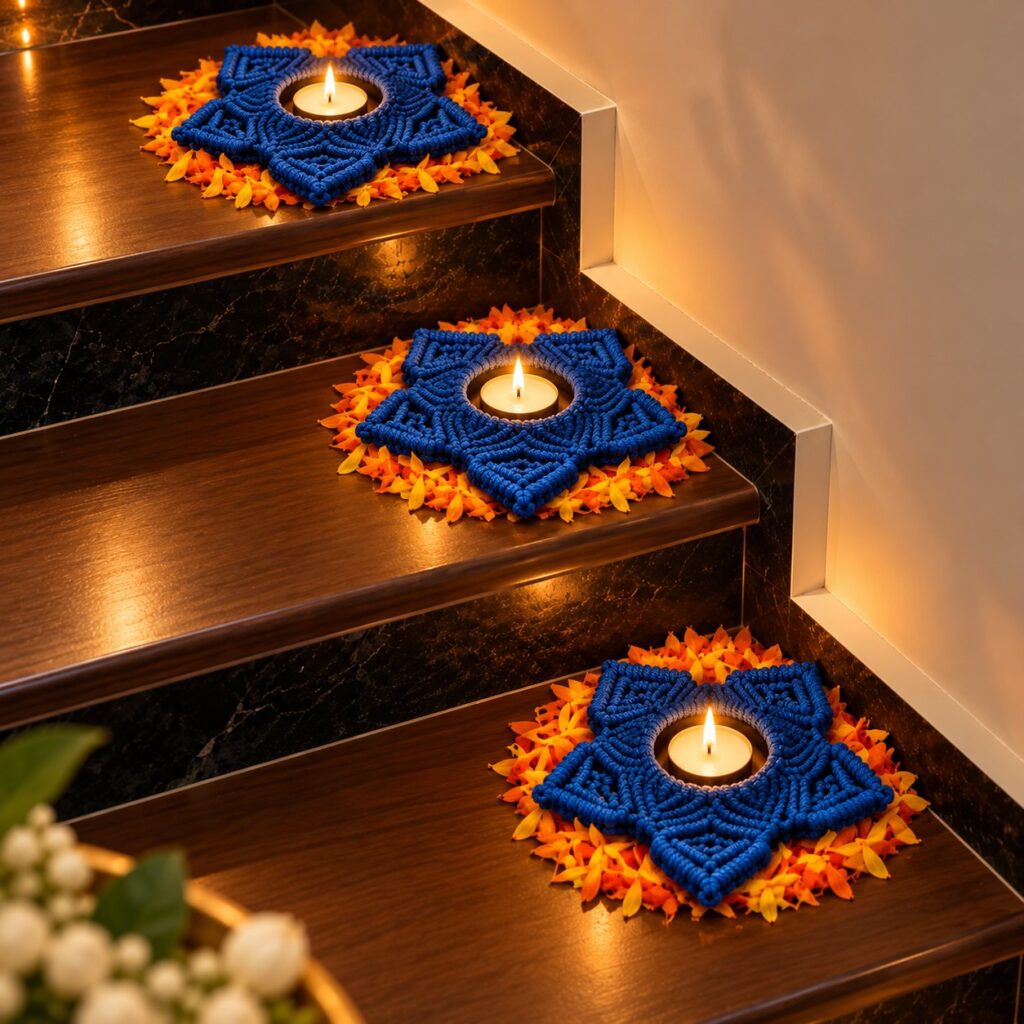
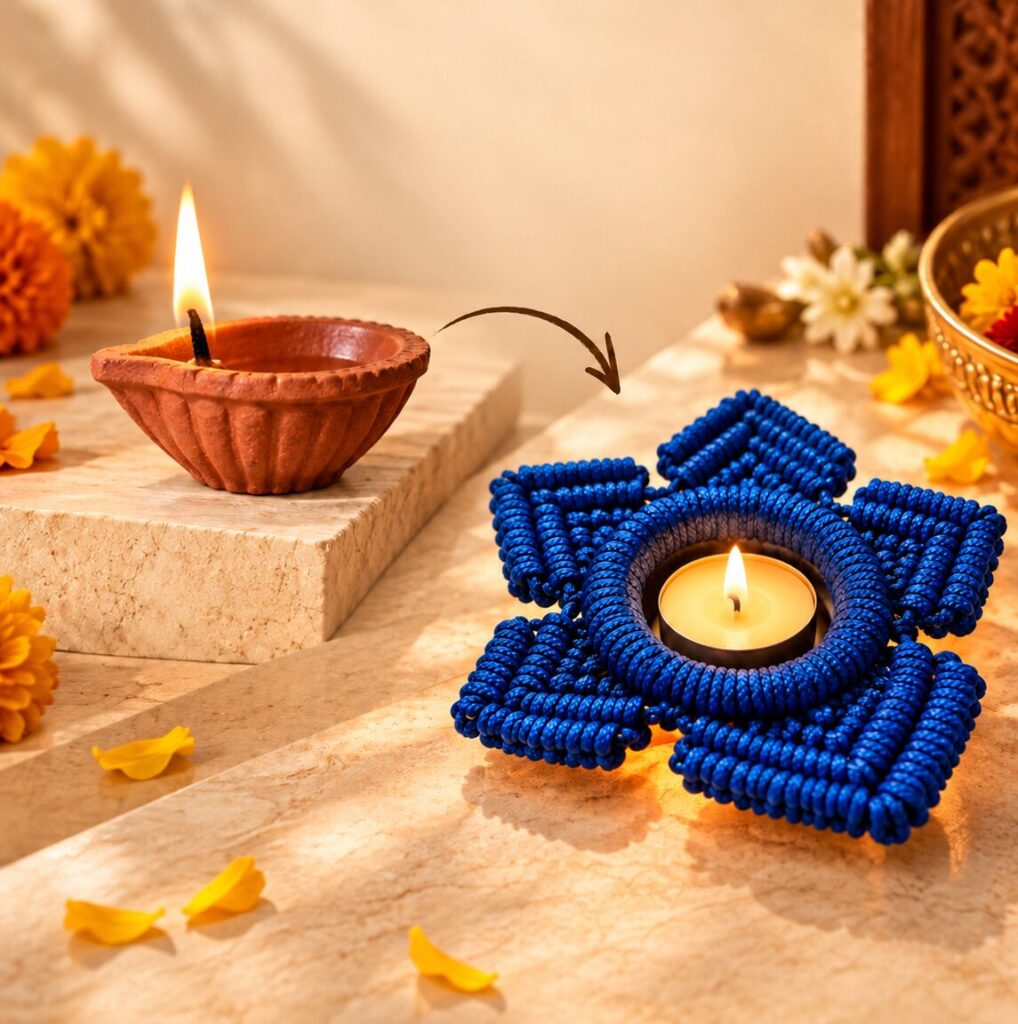
Blue Macrame Star Tealight Holder
In Diwali Add a distinctive decorative accent to your home with the Dakshaara Blue Macrame Star-Shaped Tealight Holder
1. Place Wooden Elephants Near the Main Entrance
The main entrance is one of the most popular places to begin your Diwali entrance decoration. It welcomes guests, creates the first impression of your home and provides a natural spot for a carefully arranged festive display.
In Vastu-inspired decorating traditions, elephants are associated with strength, wisdom, stability and good fortune. Some practitioners recommend placing a pair near the entrance, with the figurines facing inward towards the home.
Here are a few ways to style wooden elephants at your entrance:
- Use a pair of elephants: Place two similar figurines on a console table or on either side of the doorway if sufficient space is available.
- Keep the arrangement balanced: Choose pieces of similar size and finish so that the entrance looks coordinated.
- Add traditional accents: Complement the wooden elephants with fresh marigold flowers, a simple toran or a small decorative tray.
- Keep the doorway clear: Avoid placing artefacts where they could obstruct the door, footwear area or walking path.
For apartments with a narrow entrance, one well-chosen wooden elephant on a compact console may be more practical than a pair. The aim is to create a welcoming display that suits your home rather than overcrowding it to follow a decorative rule.
2. Understand the Meaning of an Elephant’s Trunk Position
When researching wooden elephant Vastu, you will often come across discussions about whether the trunk should point upwards or downwards. These positions carry different symbolic interpretations in contemporary Vastu-inspired home decor.
An elephant with a raised trunk is commonly associated with celebration, good fortune and prosperity. A downward-facing trunk is often linked to steadiness, patience and grounding. Neither interpretation needs to dictate every decorating decision.
Consider these points before choosing an elephant showpiece:
- Raised trunk: A popular choice for festive entrance displays and living room decorations.
- Lowered trunk: An option for those who prefer a more understated figurine or a different traditional symbolism.
- Carved details: Look for a design whose shape, finish and craftsmanship complement your existing decor.
- Personal preference: Choose a piece that you enjoy displaying instead of purchasing one solely because of a symbolic interpretation.
The trunk position is a matter of tradition and belief, not a guarantee of financial success or other outcomes. A beautiful handcrafted wooden elephant can be appreciated for its artistic details regardless of its trunk position.
3. Which Direction Is Suitable for Wooden Elephant Placement?
The direction of decorative objects is an important consideration for people following Vastu tips for home entrance and living room arrangements. However, recommendations about elephant figurines are not completely consistent across contemporary Vastu guides. Some recommend north or east, while others emphasise the entrance or different directional zones.
The following table summarises commonly encountered interpretations without presenting them as universal rules.
| Placement | Traditional interpretation | Practical decorating idea |
|---|---|---|
| Main entrance | Welcome, strength and protection | Display a pair on a suitable console or side ledges. |
| North-facing area | Often associated with prosperity and career | Use a small figurine on a clean shelf. |
| East-facing area | Often associated with harmony and new beginnings | Pair the elephant with flowers or natural decorative accents. |
| Living room | Symbolises strength and family harmony | Display it on a side table or open shelf. |
Before moving furniture or buying new artefacts, consider your room layout and how the piece will look in the available space. If following a particular Vastu tradition matters to your household, consult a practitioner familiar with that approach.
For everyone else, a stable surface, a clear walkway and a balanced arrangement are sensible starting points.
4. Arrange Traditional Wooden Artefacts in the Living Room
The living room is an ideal setting for traditional Indian home decor because it offers opportunities to display decorative pieces without disrupting everyday activities.
Wooden elephants, carved showpieces and other heritage-inspired artefacts can add texture to a console table, bookshelf or sideboard. Their natural appearance also works well with contemporary interiors that use neutral colours, wooden furniture and simple accessories.
Try these styling ideas:
- Create a focal point: Place one distinctive artefact where it can be seen easily when entering the room.
- Combine different heights: Pair a medium-sized showpiece with a shorter decorative object and a flower vase.
- Mix materials thoughtfully: Wood can be paired with brass accents, cotton textiles or ceramic accessories.
- Use a consistent colour palette: Natural brown, cream, muted gold and marigold tones can create a warm festive appearance.
- Avoid overcrowding: Leave some open space around each item so that the individual details remain visible.
For example, a wooden elephant placed on a console table with a small flower arrangement can create a simple Diwali display. You do not need multiple statues, elaborate furniture or expensive accessories to make the arrangement feel complete.
5. Decorate the Pooja Area with Traditional Artefacts
For many Indian households, the pooja area has a special place during Diwali. Cleaning the space, arranging ritual essentials and preparing diyas can be an important part of the celebration.
Traditional Diwali decor in the pooja area should complement the household’s customs without interfering with the rituals themselves. Wooden pooja accessories, decorative stools and carefully selected artefacts can add a traditional touch where appropriate.
You can consider:
- A wooden pooja stool or mookali for a suitable ceremonial purpose.
- Fresh flowers or a small garland arranged neatly around the space.
- A clean tray for ritual essentials.
- A modest decorative accent that does not obstruct religious idols or ritual activities.
Keep the arrangement simple enough to clean and maintain. Avoid crowding the pooja area with decorative pieces that have no practical or personal significance.
Fire safety is essential. Wooden artefacts are combustible, so place diyas on stable, heat-resistant surfaces and keep them well away from wooden items, curtains, paper decorations and dried flowers. Never leave a lit diya unattended.
Dakshaara’s website features handcrafted home decor and a Puja & Spiritual collection. You can explore the brand’s official website to see which traditional accessories are currently available.
Dakshaara
6. Combine Wooden Home Decor with Diwali Lighting
Lighting is an important part of Diwali home decoration ideas, but the way you arrange it can make a significant difference to the overall look of a room.
Warm lighting can highlight the natural grain, carved patterns and contours of wooden artefacts. Rather than illuminating every corner equally, use a few well-positioned lights to draw attention to the areas you want to showcase.
Here are some practical ways to combine lighting with wooden showpieces:
- Use indirect lighting: Position a lamp nearby to highlight the decorative piece without placing a hot bulb directly against it.
- Add battery-operated lights: These can work well on shelves where traditional lamps or electrical connections are inconvenient.
- Keep wires organised: Secure cables away from walking paths, doorways and places where children may pull them.
- Position diyas carefully: Keep open flames away from wooden surfaces, fabric, paper and electrical decorations.
- Avoid excessive decoration: A small illuminated display often looks more balanced than filling every shelf with lights and accessories.
For a traditional yet contemporary style, combine wooden pieces with warm light, simple brass accents and fresh flowers. This allows the craftsmanship to remain the focus of the arrangement.
7. Choose Traditional Artefacts That Suit Your Home
Not every decorative item needs to have a Vastu-related meaning. Handcrafted wooden artefacts can also be chosen for their design, cultural significance and ability to complement your home.
When selecting traditional artefacts for Diwali, consider the following:
- Material: Choose a material and finish that complement your furniture and other decorations.
- Size: A large carved showpiece may suit a spacious console, while a compact figurine works better on a small shelf.
- Craftsmanship: Look at the carving, finishing and overall quality of the piece.
- Placement: Decide where the item will go before purchasing it.
- Maintenance: Check the care instructions, especially if the artefact has a delicate finish.
- Personal meaning: Consider whether the piece reflects your taste, family traditions or appreciation for Indian craftsmanship.
For a heritage-inspired home, wooden showpieces can sit comfortably alongside contemporary furniture. The contrast between traditional carving and modern design can make a display feel personal without requiring a complete interior makeover.
Dakshaara is an Indian heritage-inspired brand featuring handcrafted home decor and wooden products. Its collections offer a starting point for exploring decorative pieces that connect traditional craftsmanship with contemporary interiors.
8. Decorate a Small Home Without Creating Clutter
For apartments and compact homes, Diwali home decor Vastu tips should be applied alongside practical space planning. A small entrance or living room does not need the same number of decorative objects as a large house.
A few thoughtful choices can make a noticeable difference.
For a compact entrance: Use a narrow console or wall shelf, provided it does not obstruct the doorway. One wooden elephant, a small flower arrangement and a simple festive accent can be enough.
For a small living room: Place a carved showpiece on an existing bookshelf or side table instead of adding extra furniture. Keep the surrounding area uncluttered.
For a rented home: Choose lightweight decorations that are easy to move and do not require permanent fixtures. This makes it easier to change the arrangement after Diwali.
For a shared family space: Keep fragile artefacts away from edges and busy walkways. Choose a location where the piece will not interfere with daily routines.
The most effective festive home styling makes your home comfortable to use as well as attractive to look at. You can honour traditional beliefs without sacrificing valuable space.
9. Common Mistakes to Avoid When Placing Wooden Elephants
Even an attractive showpiece can look out of place if it is displayed without considering the surrounding space. Before completing your Diwali home decoration, review these common mistakes.
- Overcrowding the entrance: Too many figurines, flower arrangements and decorative lights can make a small foyer difficult to navigate.
- Ignoring stability: Heavy or delicate artefacts should not be placed on wobbly tables or narrow ledges.
- Following conflicting Vastu advice blindly: Directional recommendations differ between sources. Choose a consistent approach if Vastu is important to you.
- Placing wood too close to flames: Keep wooden pieces away from diyas and other heat sources.
- Neglecting maintenance: Dusty or damaged decorative objects can detract from an otherwise beautiful display.
- Buying items without a plan: Measure the intended space and consider the existing colour scheme before adding new decorations.
Remember that Vastu-inspired decorating is a personal and cultural practice. There is no need to discard a treasured wooden artefact simply because its placement does not match a particular online recommendation.
10. Your Diwali Home Decor Checklist
Use this quick checklist before welcoming guests for the festival.
- Clean and declutter the main entrance.
- Ensure the front door opens and closes freely.
- Choose a suitable location for wooden elephants and traditional artefacts.
- Decide whether you prefer a single elephant or a pair.
- Check the size and stability of shelves and display tables.
- Arrange flowers, lamps and other decorations without overcrowding the space.
- Keep the pooja area organised according to your family’s customs.
- Place diyas away from wooden artefacts, fabrics and electrical decorations.
- Secure wires and keep walkways clear.
- Clean and inspect your wooden showpieces before displaying them.
A little planning helps you create a festive home that reflects your preferences, respects your traditions and remains practical for everyday living.
Frequently Asked Questions
1. Where should I place a wooden elephant at home during Diwali?
The main entrance and living room are common choices in Vastu-inspired decorating. Place the figurine on a clean, stable surface where it is easy to appreciate and does not obstruct movement.
2. Is a wooden elephant with its trunk raised considered auspicious?
Many contemporary Vastu interpretations associate a raised trunk with prosperity, good fortune and celebration. These are traditional symbolic meanings rather than scientifically established effects.
3. Which direction is best for an elephant showpiece?
Some Vastu guides recommend the north or east, while others emphasise placement near the entrance or in other directional zones. There is no single recommendation shared by every source. Consider your preferred tradition and your home’s layout.
4. Can I place wooden elephants in my living room?
Yes. A wooden elephant can be displayed on a console table, sideboard or open shelf. Choose a size and finish that complement your furniture, and leave enough space around the figurine to keep the display visually balanced.
5. Can I use wooden artefacts in my Diwali pooja room?
Wooden pooja accessories and other suitable traditional pieces can complement a pooja area. Arrange them according to your household’s customs and keep them well away from diyas, incense embers and other heat sources.
6. How can I decorate a small home with traditional artefacts for Diwali?
Choose one or two decorative pieces, such as a wooden elephant or a carved showpiece, and display them on an existing shelf or compact console. Add flowers and soft lighting, but keep doorways and walking areas clear.
Conclusion
The best Diwali home decor Vastu tips bring together traditional symbolism, thoughtful placement and practical home styling. Wooden elephants can create a welcoming entrance display, while traditional artefacts add character to living rooms and other carefully chosen spaces.
You do not need to fill every corner or follow every directional recommendation you encounter. Choose meaningful decorative pieces, arrange them in a way that suits your home and keep safety in mind when using festive lights and diyas.
This Diwali, let your home reflect your appreciation for Indian heritage through simple decorations and thoughtfully chosen handcrafted accents.
Explore Dakshaara’s handcrafted home decor
Discover traditional and contemporary home decor through the official Dakshaara website. Explore the available collections and choose pieces that complement your home and your personal style.
Leave a Reply