

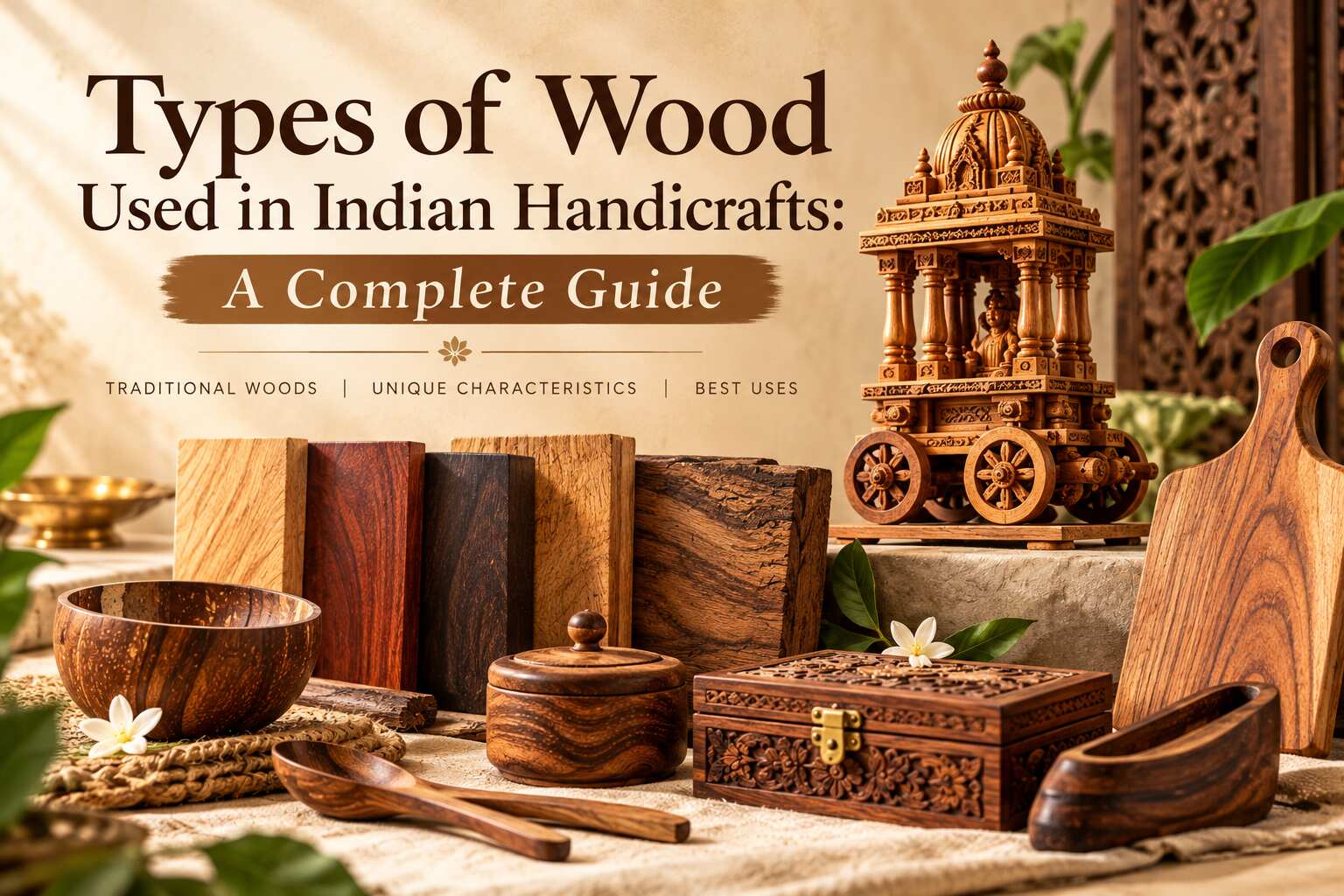

The types of wood used in Indian handicrafts influence how a product looks, feels, performs and fits into a home. Teak, sheesham, mango, neem and other woods are used for different types of wooden décor, furniture and traditional craft products, with each material offering its own grain, colour and working characteristics.
If you are buying a wooden handicraft for your home, identifying the wood species is useful, but it should not be the only consideration. The quality of carving, surface preparation, construction and finish can have just as much impact on the final product.
This guide explains commonly encountered Indian handicraft wood types, how they differ visually and what to check before buying handcrafted wooden décor.
Teak Wood for Indian Handicrafts
Teak wood is widely used in Indian woodworking, furniture and decorative products. It generally has a warm golden-brown appearance and can display straight, flowing or more pronounced grain patterns.
Its natural character makes teak suitable for products where the wood itself is intended to remain visually prominent. A well-finished teak décor piece can work particularly well in interiors that use natural materials and warm wooden tones.
When choosing a teak wood handicraft, don’t identify the timber only by colour. Stains, oils, polish and other finishing treatments can significantly change its appearance. Always check the seller’s material specification.
For products such as wooden décor, trays, furniture and handcrafted utility pieces, also examine how smoothly the edges and surfaces have been finished.
Sheesham Wood for Wooden Handicrafts
Sheesham wood, commonly associated with Indian rosewood, is another material frequently encountered in Indian furniture and woodworking.
It can show medium to deep brown tones with noticeable variation in grain. This variation can make individual pieces visually distinctive, which is particularly suitable for handcrafted wooden décor.
Sheesham can be used for furniture, decorative objects and other wooden products where visible grain is part of the design.
When comparing sheesham products, pay attention to the actual material description rather than judging the wood from an online photograph. Lighting, camera settings and surface finishes can make the same timber appear significantly different.
Mango Wood in Indian Handicrafts
Mango wood is used for furniture, decorative products and various forms of woodworking. It can display varied grain patterns and warm natural tones.
One advantage of visible natural grain is that a handcrafted mango wood product may have a slightly different appearance from another piece made from the same material. This can add individuality to shelves, consoles and other home décor settings.
However, the wood alone does not determine quality.
When buying a mango wood handicraft, inspect the quality of the finishing, particularly around edges, corners, carved details and joints. A carefully finished surface can make a substantial difference to the appearance of the final product.
Neem Wood for Traditional Wooden Crafts
Neem wood is another timber encountered in Indian woodworking and traditional craft applications.
Its suitability depends on the intended product, preparation method and finishing process. As with other natural woods, its appearance can vary between individual pieces.
If a wooden product is specifically marketed as neem wood, buyers should check the material information rather than assuming that a traditional-looking design automatically indicates a particular species.
This is especially important when purchasing handcrafted décor online, where photographs cannot reliably identify the exact wood species.
Sandalwood for Small Decorative Crafts
Sandalwood has a distinct place in Indian decorative and carving traditions, particularly for smaller crafted objects.
It should not, however, be treated as interchangeable with commonly used furniture and décor woods. Availability, application and material sourcing can differ depending on the product.
If a seller specifically describes an item as sandalwood, check the product documentation and material details carefully.
For larger wooden home décor products, other commercially used timber species may be more practical depending on the design and intended application.
How Natural Wood Grain Changes a Handcrafted Product
Natural wood is not completely uniform. Even two products made from the same species can show differences in:
- Grain direction
- Colour variation
- Texture
- Natural markings
- Figure and pattern
- Surface appearance
These differences are particularly noticeable in handmade products.
For example, a wooden decorative object with visible grain may have a slightly different appearance from another piece in the same collection. This is not necessarily a manufacturing defect.
However, buyers should distinguish natural wood variation from poor workmanship.
Uneven sanding, rough edges, unstable joints, cracks caused by poor construction or inconsistent finishing are different issues and should not simply be described as “natural variation.”
Wood Species vs Craftsmanship: What Matters More?
Choosing the right wood for Indian handicrafts is only one part of evaluating a product.
Two products made from the same timber can look completely different because of differences in:
- Carving and detailing
- Design proportions
- Joinery
- Sanding
- Surface preparation
- Protective finish
- Structural stability
This matters particularly for decorative pieces such as wooden temple décor, carved artefacts, wooden figurines and traditional-inspired home accessories.
For a premium-looking product, the combination of material and workmanship is more meaningful than choosing a wood simply because its name sounds expensive.
How to Choose Wooden Décor for an Indian Home
Before buying a wooden handicraft, consider where and how you will use it.
Consider the Placement
A decorative piece for a living room shelf has different requirements from a frequently handled kitchen or utility product.
For pooja spaces and traditional interiors, consider the size, surrounding décor and visibility of the piece. For living rooms and consoles, proportion and finish may matter more.
Match the Wood With Your Interior
Warm wooden tones can complement neutral, beige and earthy interiors, while darker finishes can create stronger contrast.
Don’t choose solely based on the wood species. Consider whether the product’s actual finish works with your existing furniture, flooring and lighting.
Check the Product Construction
Look closely at joints, edges, carving and overall stability.
A beautiful wood grain cannot compensate for poor construction.
Check the Material Description
If the species matters to you, confirm whether the product is made from solid wood, engineered material, veneer or a combination of materials.
A photograph alone is not a reliable method of identifying timber.
Wood vs Finish: Why Product Photos Can Be Misleading
The same wood can appear very different depending on how it is finished.
Natural oil, polish, stain, paint and other surface treatments can change the perceived colour and depth of the grain.
This is why trying to identify teak, sheesham or mango wood from a product photograph can be unreliable.
When shopping online, use photographs to evaluate design, detailing and overall appearance, but use the written product specification to verify the material.
For premium handcrafted décor, close-up images are also useful because they allow you to examine carving, grain and surface finishing more carefully.
Wooden Handicrafts for Contemporary Indian Homes
Traditional craftsmanship does not have to mean that a product only suits a traditional interior.
A carefully designed wooden artefact can work alongside contemporary furniture, neutral walls and modern lighting.
For example, a carved wooden piece can become a focal point on a console, while smaller handcrafted products can add warmth to a shelf or pooja space.
At Dakshaara, the focus is on bringing the character of Indian craftsmanship into products designed for contemporary homes. This includes handcrafted wooden décor and traditional-inspired pieces where material, detailing and presentation work together.
The goal is not simply to place an old-fashioned object in a modern room. The design, scale and finish should make the piece feel intentional within the space.
How to Check Wood Quality Before Buying
If you are buying Indian wooden handicrafts online, use this simple checklist:
- Check the stated wood species rather than guessing from colour.
- Confirm the construction, including whether it is solid wood or another material.
- Inspect close-up photographs for grain, carving and surface finish.
- Look at the edges and joints for signs of careful workmanship.
- Check dimensions to make sure the piece suits your intended space.
- Understand the finish because polish or stain can alter the natural appearance.
- Ask the seller if important material information is missing.
This approach gives you a more reliable basis for comparing handcrafted products.
Why Wood Makes Indian Handicrafts Distinctive
Wood brings a combination of material character and craftsmanship that is difficult to reproduce with completely uniform manufactured surfaces.
The grain, texture, carving and finishing can all contribute to the appearance of a finished piece. Small differences between products can also make handmade décor feel more individual.
For Indian homes, this makes wooden products suitable for a wide range of spaces, including living rooms, bedrooms, consoles, shelves and pooja areas.
The most important point is to evaluate the material, craftsmanship and design together rather than treating the wood species as the only measure of quality.
Final Thoughts
Understanding the types of wood used in Indian handicrafts can help you make a more informed decision when buying wooden décor.
Teak, sheesham, mango, neem and sandalwood each have different characteristics and applications. But identifying the wood is only the starting point. The quality of carving, construction, sanding, finishing and overall design also determines how a handcrafted product looks and performs.
When choosing a wooden handicraft for your home, verify the material, examine the workmanship and consider how the product will work with your existing interior.
Explore Dakshaara’s handcrafted home décor to discover wooden pieces inspired by Indian craftsmanship and designed for contemporary spaces. Check the individual product details for material, dimensions, finish and care information before making your choice.
Leave a Reply