



Vastu tips for placing a pooja mandir at home can help families plan a prayer space that respects traditional preferences while remaining practical for everyday worship. In Tamil Nadu, homes range from traditional houses with dedicated pooja rooms to compact Chennai apartments where a wooden mandir must fit into a living room or a small prayer corner.
The right placement should consider your family’s worship traditions, available space, accessibility, ventilation and lighting. Vastu recommendations can vary between practitioners and traditions, so treat them as traditional guidance rather than scientifically established requirements.
Here is how to plan a clean, functional and thoughtfully styled home pooja mandir.
1. Which Direction Is Best for a Pooja Mandir According to Vastu?
In many Vastu traditions, the northeast direction, known as Ishanya, is considered favourable for a prayer space. East and north are also commonly preferred when the northeast is not practical.
However, the direction should be considered alongside your home’s actual layout. In a Chennai apartment, for example, the northeast corner might contain a doorway, kitchen counter or balcony entrance.
Rather than making your home inconvenient, identify a location where the mandir can remain clean, accessible and separate from everyday household activity.
If your family follows specific directional requirements, consult a qualified Vastu practitioner who can assess your complete floor plan.
2. Pooja Mandir Placement Ideas for Tamil Nadu Homes
A well-planned pooja mandir should have a clearly defined place within your home, even when a separate prayer room is unavailable.
Traditional Tamil Nadu houses may have a dedicated pooja room, while modern apartments often require a compact arrangement.
Consider these placement options:
- An unused living-room corner.
- A suitable recessed wall area.
- A compact wooden floor-standing mandir.
- A securely installed wall-mounted pooja unit.
Avoid busy passageways where people frequently walk past or household items tend to accumulate. If the mandir is in a shared living area, a dedicated shelf or surrounding arrangement can help distinguish the prayer space from the rest of the room.
Choose a location that allows comfortable access for daily rituals and routine cleaning.
3. How to Choose the Right Wooden Pooja Mandir Size and Height
Before buying a wooden pooja mandir, measure the available space instead of relying on a standard size found online.
For a wall-mounted mandir, check the installation height and whether you can comfortably reach the idols, diya and pooja essentials. For a floor-standing wooden mandir, consider both the platform height and the dimensions of the surrounding area.
Measure the following before installation:
- Available width, height and depth.
- Idol height, including its base.
- Space required for a pooja tray.
- Clearance for doors, shutters and drawers.
- Reach required for arranging flowers and cleaning.
Also check that the wall or floor can safely support the unit. A mandir that fits the available space but is difficult to use will create problems during everyday worship.
4. How to Arrange Idols in a Home Pooja Mandir
The idols should remain the primary focus of your prayer space. Arrange them according to your family’s religious traditions while ensuring that each idol is visible and accessible.
Leave enough room for flowers, lamps and daily rituals. Avoid placing decorative objects where they block the idols or make cleaning difficult.
For a compact wooden mandir, resist the temptation to fill every available surface. Intricate carvings, multiple idols and numerous accessories can make a small platform look crowded.
A practical arrangement should allow you to perform daily pooja without repeatedly moving objects around.
5. Keep the Pooja Space Clean and Protect the Wooden Finish
A home mandir should not become a general storage area. Keep frequently used pooja accessories, such as the diya, incense holder, pooja tray and kumkum container, organised in designated places.
Move unrelated household items elsewhere so that the prayer area remains easy to maintain.
Wooden mandirs also need appropriate care. Dust the surface regularly using a soft cloth, wipe oil and water spills promptly, and avoid excessive moisture or harsh cleaning chemicals unless they are approved for the particular finish.
In warmer and humid parts of Tamil Nadu, appropriate ventilation and regular maintenance can help keep wooden décor in good condition. Follow the care instructions for the specific wood and finish rather than assuming all wooden surfaces can be cleaned in the same way.
6. Safe Lighting Ideas for a Wooden Pooja Mandir
Lighting helps highlight carved details and creates a welcoming atmosphere around the mandir.
Warm LED lighting is a practical option for wooden mandirs because it can emphasise the natural grain without making the prayer corner excessively bright. Ensure electrical fittings are installed safely and that wiring is kept away from oil, moisture and heat.
Traditional diyas may also be part of your family’s worship practices. When using an open flame, place it on a stable, heat-resistant surface and keep it away from wooden panels, curtains, paper and flower garlands. Never leave a burning diya unattended.
Flameless LED diyas are an alternative when you want a decorative light without an open flame.
7. How to Choose a Wooden Pooja Mandir for Your Home Interior
The mandir should complement your interior without losing its purpose as a dedicated prayer space.
For a small Chennai apartment, a compact wooden mandir with simple detailing can preserve floor space. In a traditional Tamil Nadu home with wooden furniture and brass accents, a carved wooden mandir may complement the existing interior.
For contemporary interiors, clean lines and restrained decoration can create a more cohesive appearance.
When selecting a mandir, consider three practical factors:
- Dimensions: Choose a unit that fits without obstructing movement.
- Storage: Check whether it has enough space for daily pooja essentials.
- Maintenance: Select a finish that you can clean and maintain appropriately.
At Dakshaara, handcrafted home décor focuses on the relationship between material character, thoughtful design and everyday usefulness. Apply the same approach when choosing a mandir and its accessories.
8. Choose Pooja Accessories That Complement the Mandir
A wooden mandir does not need numerous decorative additions to look complete. A few well-chosen accessories can provide both visual balance and practical value.
Consider a wooden pooja tray, a suitable incense holder, fresh flowers or one or two handcrafted accents. Brass-toned accessories can also provide contrast against natural wood.
For example, a coconut-shell agarbatti stand can introduce a different natural material alongside the wooden mandir while providing a designated place for incense.
Select accessories according to the available platform space and your family’s daily routine. Keep burning incense and lamps away from combustible materials, and use holders suitable for their intended purpose.

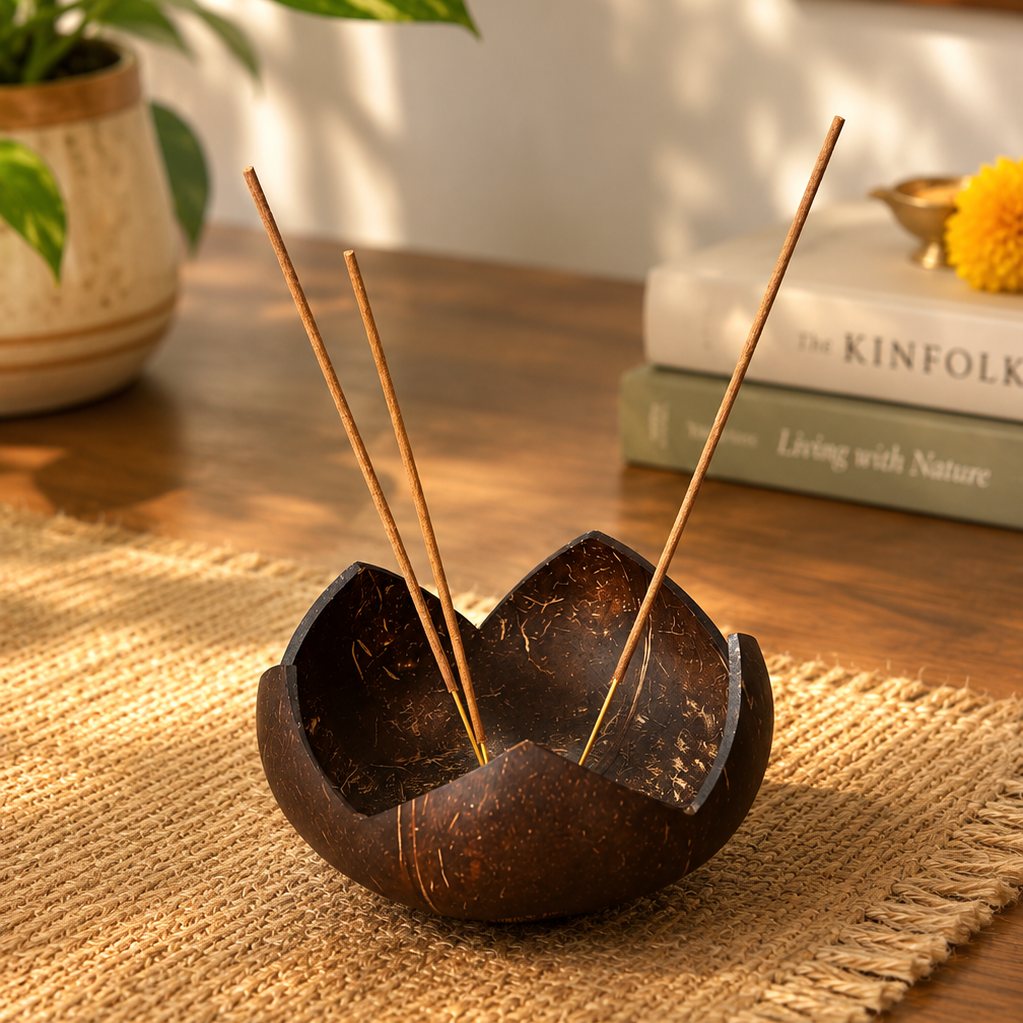
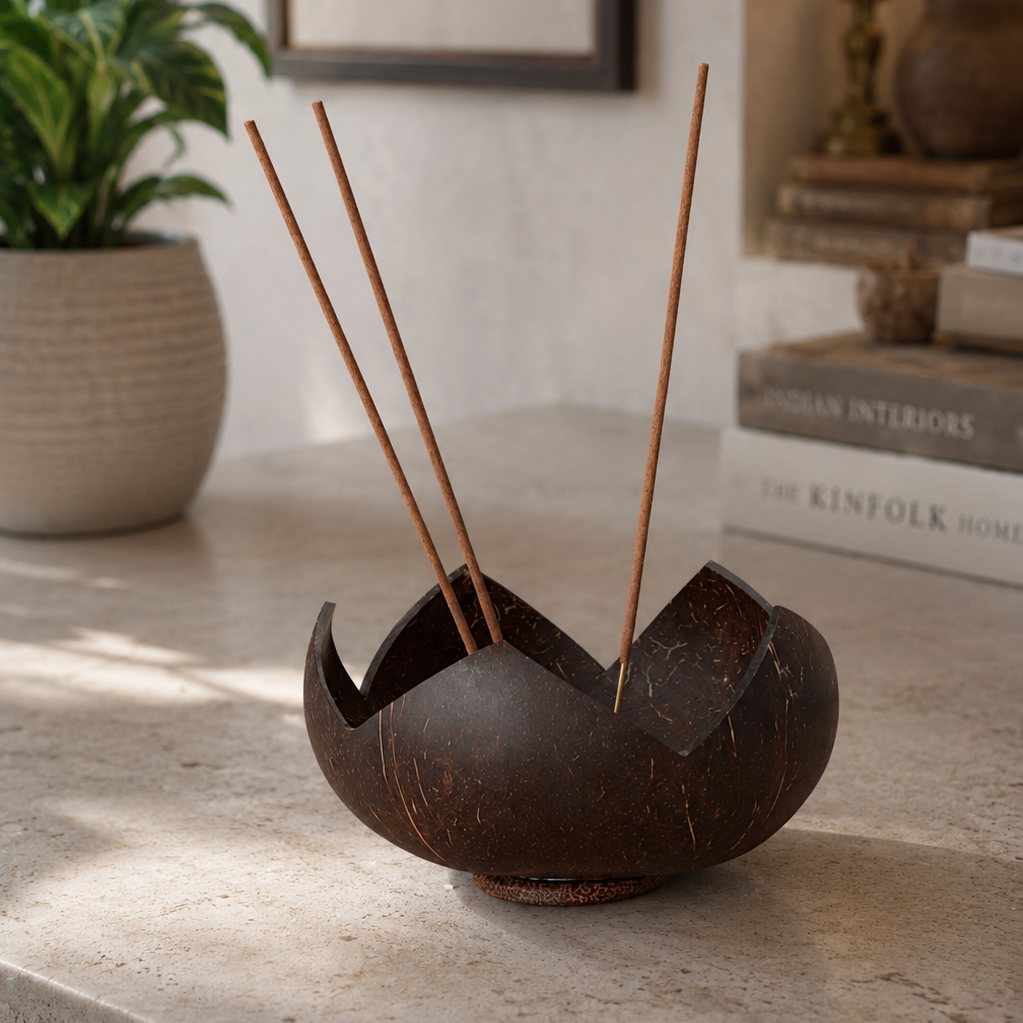
Coconut Shell Agarbatti Stand with Ash Catcher
Dakshaara Coconut Shell Agarbatti Stand with Ash Catcher
9. Pooja Mandir Vastu for Bedrooms and Small Apartments
Some Vastu traditions have specific preferences regarding mandir placement in bedrooms. When another suitable location is available, families may prefer a separate prayer corner.
However, compact urban homes do not always provide that flexibility. If a bedroom is the only practical option, consider a clearly defined wooden mandir with doors or a separate unit that distinguishes the prayer space from the rest of the room.
Keep the surrounding area organised and follow your family’s traditions for any specific religious requirements.
In small apartments, prioritise a location that remains accessible, clean and safe rather than making major changes to the room layout based solely on general online advice.
10. Common Pooja Mandir Placement Mistakes to Avoid
When following Vastu tips for placing a pooja mandir at home, avoid overlooking everyday usability.
Common mistakes include:
- Buying a mandir before measuring the available space.
- Installing a wall-mounted unit at an inconvenient height.
- Overcrowding the platform with idols and accessories.
- Using lower shelves as general household storage.
- Placing open flames close to wooden surfaces or curtains.
- Following conflicting Vastu recommendations without considering your family’s traditions.
A well-planned mandir should be comfortable to use, straightforward to maintain and appropriate for the available space.
Pooja Mandir Placement Checklist
Before finalising your prayer space, use this checklist.
| Element | What to consider |
|---|---|
| Direction | Northeast is traditionally preferred in many Vastu systems. |
| Location | Choose a clean, accessible area with limited disturbance. |
| Size | Match the mandir dimensions to the available room. |
| Idols | Keep them visible and arrange them according to family traditions. |
| Height | Ensure comfortable access for prayer and cleaning. |
| Lighting | Use suitable lighting and position lamps safely. |
| Accessories | Keep useful, meaningful pooja essentials organised. |
| Maintenance | Choose a setup that is straightforward to clean. |
| Safety | Keep open flames away from combustible materials. |
What If Your Tamil Nadu Home Cannot Follow Ideal Vastu?
Modern apartment layouts do not always provide the preferred direction or a separate prayer room. If the northeast corner is unavailable, you do not necessarily need to redesign your entire home.
Instead, identify the most suitable available location and prioritise cleanliness, accessibility, organisation and safe lighting while respecting your family’s traditions.
If strict Vastu compliance is important to your family, seek advice from a practitioner who can examine the complete floor plan. This is more useful than treating a general online recommendation as a universal rule.
Create a Thoughtful Home Mandir With Dakshaara
At Dakshaara, we believe a home is shaped by the meaningful pieces we choose and cherish.
Once you have selected a suitable location for your mandir, carefully chosen handcrafted accessories can complete the space without overwhelming it. Explore Dakshaara’s home décor collection for pieces that complement natural materials and traditional interiors.
Choose accessories that serve a purpose, maintain enough space around your idols and keep the prayer area connected to the rest of your home.
Every Piece Builds a Home.
Frequently Asked Questions About Pooja Mandir Vastu
Which direction is best for a pooja mandir according to Vastu?
The northeast direction, traditionally called Ishanya, is considered favourable in many Vastu traditions. East and north are also commonly preferred. Consider your home’s layout and your family’s established traditions when deciding on placement.
Where should I place a pooja mandir in a small apartment?
Look for a clean, accessible and relatively quiet area. A compact wall-mounted or floor-standing wooden mandir can work well when a separate pooja room is unavailable.
Can I use a wooden pooja mandir at home?
Yes. A wooden mandir can suit both traditional and contemporary Indian interiors. Choose dimensions that fit your available space and follow the appropriate care instructions for the wood and finish.
Can a pooja mandir be placed in a bedroom?
Vastu traditions differ on bedroom placement. If another suitable location is unavailable, create a clearly defined and respectfully maintained prayer space while following your family’s religious practices.
How high should a home pooja mandir be?
There is no universal height suitable for every home. Ensure that the idols and essential pooja items are comfortably visible and accessible for regular prayers and cleaning.
What should I avoid around a home pooja mandir?
Avoid unrelated storage, excessive accessories, difficult-to-clean arrangements and unsafe open flames. Keep the area organised so that the idols and essential pooja items remain the focus.
Leave a Reply