

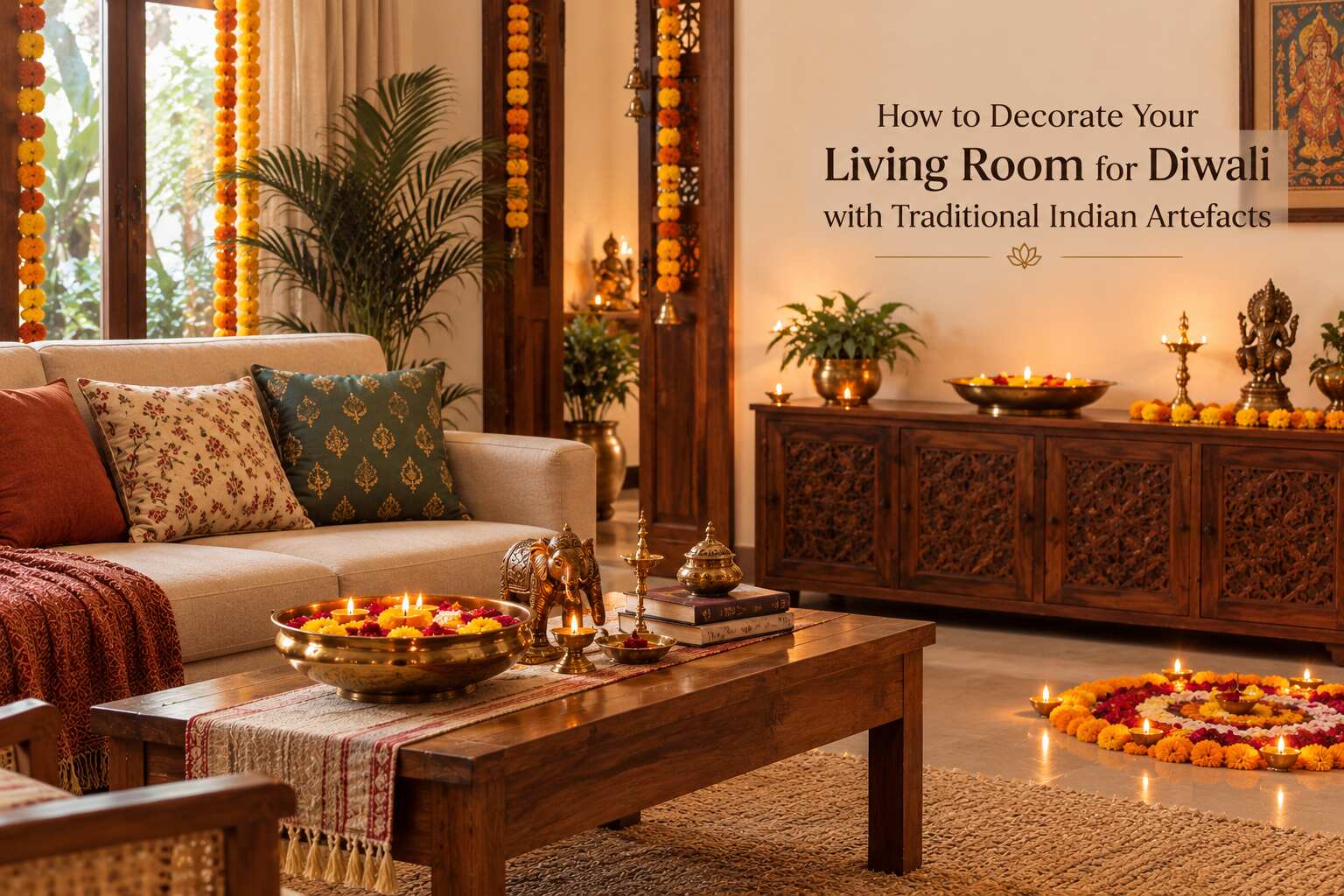

Diwali is a wonderful opportunity to give your home a fresh, festive look without changing everything you already own. The living room is often where family members gather, guests are welcomed, and celebrations take place, making it a natural starting point for your festive preparations. With carefully selected traditional Indian artefacts for living room styling, you can create a space that feels warm, welcoming and connected to Indian heritage.
You do not need dozens of decorations or an expensive makeover. A few thoughtfully placed wooden accents, traditional decorative pieces, warm lighting and festive textiles can make a noticeable difference. The key is to choose pieces that complement your existing furniture and give every corner a clear purpose.
This guide explains how to decorate your living room for Diwali using traditional Indian artefacts while keeping the arrangement practical, balanced and personal.
Quick Answer: How Can You Decorate Your Living Room for Diwali with Traditional Indian Artefacts?
To decorate your living room for Diwali, begin by decluttering the space and choosing a simple colour palette. Add wooden home decor, traditional figurines, decorative bowls, handcrafted accents and warm lighting to create visual interest. Style your coffee table, entrance console and shelves carefully, then finish with cushions, flowers and a few festive details. Keep enough open space for comfortable movement.
1. Start with a Clean and Clutter-Free Living Room
Before introducing Diwali living room decoration, make room for the items you want to display. A tidy space helps traditional artefacts stand out instead of competing with everyday belongings.
Clear unnecessary objects from the coffee table, television unit, side tables and open shelves. Dust furniture and clean the areas where you plan to place decorative pieces. You can temporarily store items that are not needed during the festive period.
- Remove unused papers, chargers and everyday clutter from visible surfaces.
- Keep frequently used items in baskets, drawers or storage boxes.
- Leave some empty space around larger decorative pieces.
- Check that walking paths and seating areas remain accessible.
A clean foundation also makes it easier to decide which pieces deserve attention. Instead of decorating every available surface, select a few areas where your traditional Indian home decor can have the greatest visual impact.
2. Use Wooden Artefacts to Bring Warmth into the Room
**Wooden home decor** is a practical choice for a living room because it can complement modern furniture, neutral walls and traditional interiors. Wood introduces natural-looking texture and can make a room feel more grounded, especially when paired with soft fabrics and warm lighting.
Choose wooden decorative objects that suit your room’s size and existing furniture. A carved figurine, a decorative bowl, a small sculptural piece or a traditional-inspired accent can add character without requiring a complete redesign.
For example, if your living room has a beige sofa and a wooden coffee table, a small wooden artefact can connect these elements visually. In a contemporary room with a glass table, one carefully selected wooden piece can introduce contrast.
When selecting traditional Indian artefacts for living room styling, consider:
- Size: Small rooms generally benefit from compact pieces rather than oversized objects.
- Finish: Choose a finish that complements your furniture instead of introducing too many competing tones.
- Placement: Keep artefacts on stable, uncluttered surfaces.
- Balance: Combine one statement piece with a few simpler accents rather than grouping many large objects together.
The aim is to create a home that reflects your taste, not to make every corner look like a display shelf.
3. Create a Festive Focal Point on the Coffee Table
The coffee table is one of the easiest places to introduce Indian decorative artefacts. It sits in a central part of many living rooms and can bring together the colours and textures used throughout the space.
Start with a tray or a simple base to organise your arrangement. Place one decorative artefact as the main feature, then add one or two complementary objects. A small bowl, a traditional-inspired figurine or a compact decorative accessory can work well, depending on the table’s size.
For a Diwali gathering, you could use this combination:
- One wooden artefact as the main decorative element.
- A small bowl for wrapped sweets or other suitable festive items.
- A simple floral accent for colour.
- A candle or decorative light placed safely away from flammable materials.
Keep the arrangement low enough that people can see one another across the table. If your family uses the coffee table regularly for snacks or serving, leave enough open space for everyday functions.
This kind of festive living room styling makes the room feel prepared for guests while keeping it comfortable for daily use.
4. Decorate Shelves and Display Units with Traditional Accents
Open shelves and display units provide useful space for traditional Indian home decor, especially when floor space is limited. However, filling every shelf with decorative objects can make the room feel crowded.
Use a mix of heights, shapes and empty space to create a more considered arrangement. A taller artefact can anchor one section, while smaller objects can be grouped nearby. Books, framed photographs and meaningful keepsakes can remain part of the display, helping the arrangement feel personal rather than overly staged.
Try these simple shelf-styling ideas:
- Place a larger decorative object on a shelf with enough room around it.
- Group two or three smaller items together instead of spreading them randomly.
- Use a consistent colour palette to connect different objects.
- Leave some shelves partially empty to create visual breathing room.
- Position fragile or heavy artefacts where they are less likely to be knocked over.
If you have a traditional wooden display cabinet, consider allowing the natural finish to remain visible rather than covering it with excessive decoration. Thoughtful spacing often makes Indian decorative artefacts easier to appreciate.
5. Style a Console Table or Sideboard with Heritage-Inspired Decor
A console table near the entrance of the living room can become a natural focal point during Diwali. It is an ideal place to display traditional Indian artefacts for living room styling without using valuable seating or floor space.
Choose one larger decorative piece and build a simple arrangement around it. A wooden sculpture, a traditional decorative object or a bowl with a distinctive shape can work as the centrepiece. Add a small flower arrangement or a neatly placed festive accent to complete the look.
If your console table is narrow, avoid placing too many objects on it. Keep the arrangement proportionate to the furniture and leave room for everyday essentials such as keys or a small storage tray.
For a more coordinated appearance, repeat one colour or material used elsewhere in the room. For example, a wooden artefact on the console can complement a wooden coffee table or shelving unit. This creates a visual connection between different parts of your traditional Indian home decor.
6. Combine Traditional Artefacts with Warm Festive Lighting
Lighting can change the atmosphere of a living room more dramatically than adding several new decorative objects. During Diwali, warm lighting can help highlight the shapes, finishes and textures of your Indian decorative artefacts.
Consider using warm-white string lights along a suitable shelf, a floor lamp beside the sofa or small decorative lights on a console. If you have a special artefact you want to draw attention to, place it where the existing room lighting illuminates it clearly.
For a balanced arrangement:
- Use ambient lighting for the overall room.
- Add accent lighting near a display shelf or decorative corner.
- Keep brighter task lighting where people read, work or serve food.
- Avoid placing lights where cables create a tripping hazard.
- Follow the manufacturer’s instructions for electrical decorations.
If you prefer traditional oil lamps or candles, place them on stable, heat-resistant surfaces away from curtains, flowers, wooden objects and other flammable materials. Never leave an open flame unattended.
The best Diwali living room decoration combines attractive lighting with practical safety. You can create a festive atmosphere without making the room too bright or filling every corner with lights.
7. Add Festive Colours Through Cushions, Throws and Textiles
You do not have to replace your sofa or curtains to create a festive look. Festive living room styling can be as simple as changing a few cushions, adding a throw or introducing a small textile accent.
Traditional Indian festive palettes often include combinations of maroon, mustard, rust, green, cream and gold. These are options rather than rules; choose colours that suit your existing furniture and personal preferences.
For a neutral living room, try:
- Mustard or rust cushions against a beige sofa.
- Deep green accents with natural wood furniture.
- Cream textiles with a few maroon or gold details.
- A patterned cushion paired with plain cushions to avoid visual clutter.
If your room already contains colourful artwork or patterned upholstery, choose simpler textiles so the decorative objects remain noticeable.
The connection between textiles and traditional Indian artefacts for living room decor matters. A warm wooden object can stand out against a cream or muted background, while colourful cushions add contrast without competing with it.
8. Create a Small Traditional Decor Corner
If you want a stronger heritage-inspired look, dedicate one corner of your living room to a small collection of meaningful decorative objects. This works particularly well in apartments where there is limited space for additional furniture.
Choose a sturdy side table, a compact shelf or an existing cabinet. Display two or three pieces with different shapes or heights, such as a wooden artefact, a decorative bowl and a framed piece of art.
You could also use a traditional wooden Mookali, a type of stool associated with pooja and traditional settings, where its size and design suit the space. Dakshaara lists a Handcrafted Wooden Mookali on its website; check the current product details before purchasing.
A decor corner does not have to represent one particular region or tradition. Choose objects that are meaningful to your family, reflect your interests or remind you of Indian craftsmanship. This makes your traditional Indian home decor feel personal rather than arranged only for photographs.
Keep the display away from narrow walkways and ensure heavier objects are placed securely. If the corner is close to a window, check that direct sunlight and moisture are suitable for the materials on display.
9. Use Flowers and Natural Accents to Complete the Look
Flowers can add colour and freshness to Diwali living room decoration without requiring permanent changes to your interior. Marigolds, roses and other locally available flowers can be used according to your preferences and the traditions followed in your household.
A small vase on a side table or a modest floral arrangement beside a decorative artefact can be enough. If you prefer a minimal look, use a single variety of flower rather than combining several colours and arrangements.
Natural accents also work well alongside wooden objects. The contrast between a flower’s colour and the texture of wood can make a display feel lively without adding more decorative items.
Keep a few practical points in mind:
- Use clean containers that can hold water safely.
- Keep flowers away from electrical connections and open flames.
- Replace wilted flowers before guests arrive.
- Avoid overcrowding small tables with flowers and artefacts together.
For households that prefer decorations they can reuse, artificial flowers or other reusable accents are alternatives. Choose whichever option fits your maintenance preferences and festive plans.
10. Decorate Small Living Rooms Without Making Them Feel Crowded
A small living room can look festive with just a few well-chosen traditional Indian artefacts for living room styling. The key is to make use of existing furniture and vertical surfaces instead of adding more pieces to the floor.
For example, a compact wooden artefact on a side table may be more effective than a large floor decoration that blocks movement. A small grouping on an existing shelf can also introduce traditional character without taking up additional space.
Try these ideas for smaller homes:
- Select one main decorative feature for the coffee table or console.
- Use wall shelves to display lightweight objects securely.
- Choose smaller artefacts that suit the scale of your furniture.
- Keep pathways between the entrance, sofa and other seating areas clear.
- Use a consistent colour palette to help the room feel visually connected.
Renters can follow the same approach without drilling into walls or making permanent changes. Use existing shelves, freestanding furniture and removable decorative accents wherever appropriate.
Remember that a festive room should still be comfortable for family members and guests. Good Diwali living room decoration makes the room feel inviting while leaving enough room for people to sit, talk and move around.
11. Choose Traditional Artefacts That Suit Your Home
Not every decorative piece will suit every living room. Before buying anything new, consider the size of your space, the materials already present and how much time you want to spend maintaining your decorations.
| Living room style | Suitable decor approach | Practical tip |
|---|---|---|
| Modern and minimal | One or two wooden artefacts with simple shapes | Keep the surrounding surface uncluttered |
| Traditional Indian | Heritage-inspired objects, patterned textiles and warm lighting | Choose a consistent colour palette |
| Small apartment | Compact artefacts and shelf displays | Preserve floor and seating space |
| Neutral interiors | Wooden accents with a small amount of festive colour | Repeat one or two colours throughout the room |
| Colourful interiors | Simple decorative pieces with understated finishes | Let existing patterns remain the main feature |
When choosing wooden home decor, read the product description carefully to understand its material, size, finish and care requirements. Do not assume that every wooden-looking object is made from solid wood or that all handcrafted products require the same maintenance.
You can explore Dakshaara’s home decor and handcrafted collections for pieces that may suit your space. Check the individual listing for current availability and product specifications before making a decision.
12. A Simple Diwali Living Room Decoration Checklist
Use this checklist before your guests arrive to make sure the room is ready without unnecessary last-minute shopping.
- Clear clutter from visible surfaces.
- Clean the coffee table, shelves and console.
- Choose one main decorative focal point.
- Arrange wooden and traditional artefacts with enough space around them.
- Add a few cushions or a throw in complementary colours.
- Check that festive lights and cables are safely positioned.
- Place flowers or other accents where they will not obstruct movement.
- Keep seating areas and walking paths clear.
- Secure fragile or heavy decorative objects.
- Remove anything that makes the room difficult to use comfortably.
The checklist helps you focus on the details that make a difference. You do not need to complete every possible decoration idea; choose the ones that work for your room and your family’s celebration.
Frequently Asked Questions
1. Which traditional Indian artefacts are suitable for a living room during Diwali?
Wooden decorative pieces, traditional figurines, decorative bowls, handcrafted accents and heritage-inspired objects can suit a living room. Choose pieces that complement your furniture and leave enough space for everyday activities.
2. How can I decorate my living room for Diwali on a budget?
Start by rearranging your existing decor, cleaning display areas and changing a few cushion covers. Add flowers, warm lighting and one or two traditional Indian artefacts for living room styling instead of buying decorations for every surface.
3. How do I decorate a small living room with traditional Indian decor?
Use compact artefacts on existing shelves, side tables or a console. Keep the floor clear, limit the number of decorative pieces and choose a coordinated colour palette. This gives the room a festive look without making it feel cramped.
4. How can I combine wooden decor with modern furniture?
Pair wooden home decor with neutral upholstery, simple furniture and a few contrasting textiles. A single wooden artefact can add warmth to a contemporary room without requiring you to replace modern furniture.
5. Where should I place decorative artefacts in my living room?
Good locations include a coffee table, console, display shelf or side table, provided the furniture is stable and the items do not obstruct movement. Keep fragile pieces away from busy walkways and place heavy objects securely.
6. How can I make my Diwali decorations look coordinated?
Choose two or three main colours and repeat them through cushions, flowers, lighting and decorative objects. Vary the shapes and heights of your artefacts, but leave enough empty space for the overall arrangement to feel balanced.
Conclusion
Decorating your living room for Diwali does not require a complete makeover. Thoughtful placement, a coordinated colour palette, warm lighting and a few meaningful decorative pieces can create a festive atmosphere while keeping your home practical.
The best traditional Indian artefacts for living room styling comes from choosing objects that suit your space and reflect your taste. Wooden accents can introduce warmth, textiles can add festive colour, and carefully arranged flowers and lighting can complete the look.
Rather than filling every surface, focus on a few areas that matter most to you. A well-arranged coffee table, a welcoming console or a small heritage-inspired corner may be all you need to make your living room feel ready for Diwali.
Explore Dakshaara’s handcrafted home decor collections to discover heritage-inspired pieces for your home and festive celebrations.
Leave a Reply