

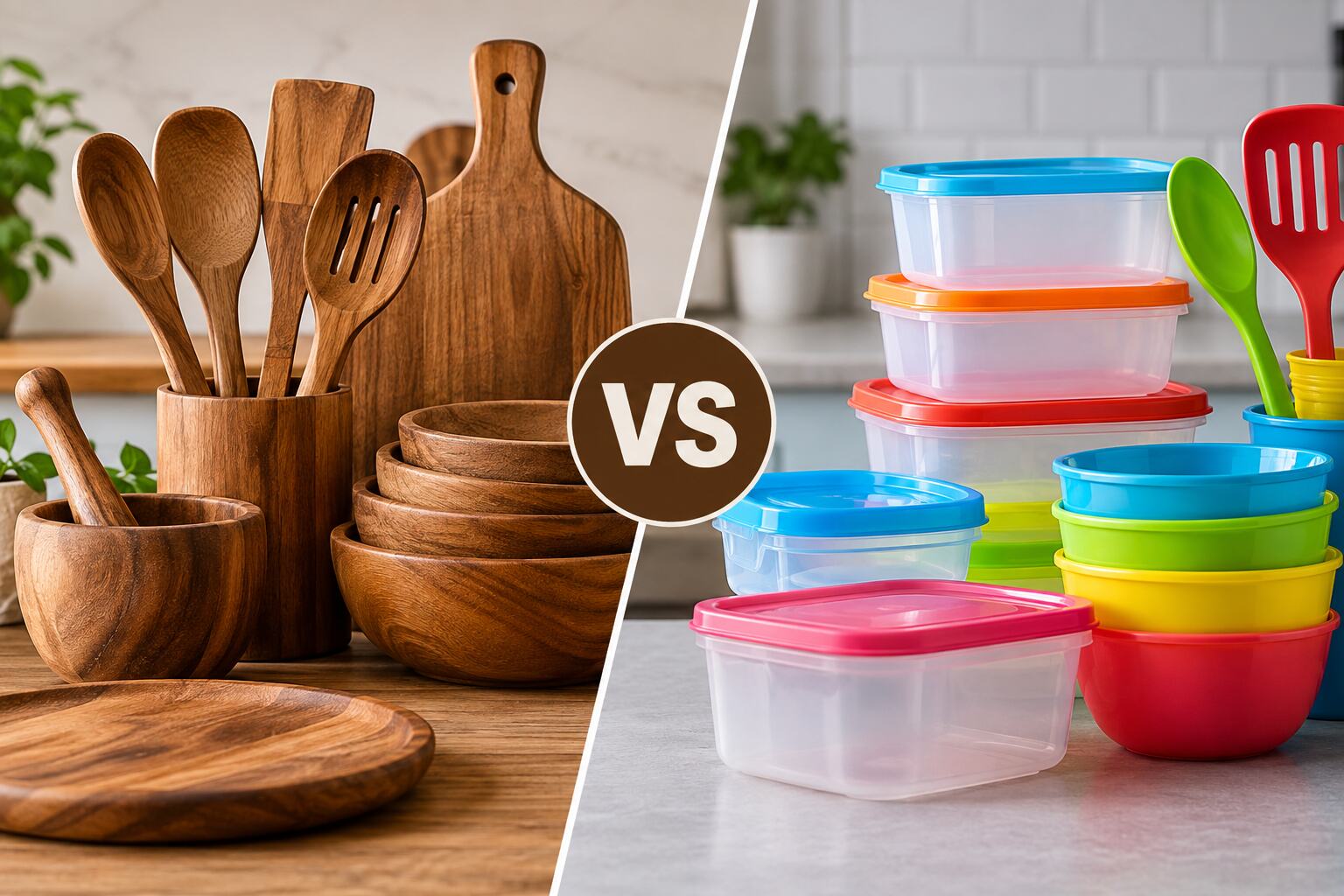

When comparing wooden vs plastic kitchenware, the better choice depends on how you use your kitchen, how much maintenance you are comfortable with and how you want your kitchen and dining space to look. Wooden kitchenware brings natural texture and handcrafted character, while plastic kitchenware is often chosen for its lightweight and convenient nature.
For Indian homes, where kitchenware is used for everything from everyday tea and breakfast to snacks and serving guests, choosing the right material can make a practical difference. Here is how wooden kitchenware and plastic kitchenware compare across everyday use, maintenance, appearance and functionality.
Wooden vs Plastic Kitchenware: Quick Comparison
| Feature | Wooden Kitchenware | Plastic Kitchenware |
|---|---|---|
| Appearance | Natural, warm and textured | Uniform and functional |
| Feel | Solid and natural | Lightweight and smooth |
| Style | Works with traditional and modern interiors | Primarily practical |
| Maintenance | Needs proper cleaning and drying | Generally easier to clean |
| Craftsmanship | Can be handcrafted | Usually manufactured |
| Serving | Well suited to trays, bowls and serving accessories | Convenient for lightweight applications |
| Home décor | Adds natural character | Focuses mainly on utility |
The key is not deciding which material is universally better. Instead, choose according to the specific kitchen task, product quality and your everyday preferences.
What Are the Benefits of Wooden Kitchenware?
Wooden kitchenware includes products such as serving trays, bowls, spoons, boards and other serving accessories. Its biggest advantage is that it combines everyday functionality with a natural appearance.
The grain and texture of wood can add warmth to a kitchen or dining table. Handcrafted wooden products may also have small variations in grain and finish, giving individual pieces a distinctive character.
For homes that use open shelving, visible countertops or styled dining spaces, natural wooden kitchenware can function as both a useful product and part of the décor.
Plastic Kitchenware: Where Is It More Practical?
Plastic kitchenware is commonly used for storage containers, utensils, trays, bowls, measuring accessories and organisers. Its lightweight construction can make it convenient for handling and certain storage applications.
However, plastic performance varies depending on the type and quality of the material. The product’s intended use and manufacturer instructions should always be considered, particularly when dealing with food contact or heat.
If your main priority is lightweight kitchenware and easy handling, plastic can be a practical option.
Wooden Kitchenware vs Plastic: Key Differences
1. Natural Kitchenware Appearance and Style
Wooden kitchen products have a natural grain and texture that can make serving areas feel warmer and more inviting. A wooden tray or bowl can complement wooden furniture, neutral interiors, traditional Indian tableware and minimalist décor.
Plastic products generally have a more consistent appearance and are usually selected for convenience rather than decorative value.
If your kitchenware is regularly visible on the dining table or countertop, wooden kitchenware offers an additional styling advantage.
2. Kitchenware Durability and Everyday Use
Durability depends on product quality, construction and intended use rather than material alone.
A well-made wooden kitchen product can be sturdy enough for regular serving and everyday handling when properly cared for. Plastic products can also be durable, but their performance depends considerably on the specific type and construction.
Instead of choosing based only on the material, check the product’s build, size and intended purpose before buying.
3. Wooden and Plastic Kitchenware Maintenance
Maintenance is one area where the two materials differ clearly.
Wood requires attention to moisture and drying. After cleaning, wooden products should be dried properly instead of being left wet for extended periods. Their exact care requirements depend on the type of wood, finish and product.
Plastic kitchenware is generally easier to clean and may require less day-to-day maintenance.
If convenience is your main priority, plastic may be easier. If you are willing to provide basic care, wooden kitchenware can be a practical long-term addition to your kitchen.
4. Wooden Serving Trays for Indian Homes
A wooden serving tray is particularly useful in Indian homes because serving is an everyday part of many routines. It can be used for morning tea or coffee, breakfast, evening snacks, sweets or serving guests.
Beyond function, a wooden tray can also work with dining tables, wooden furniture, brass accents and traditional tableware. This makes it useful when you want your serving products to contribute to the overall appearance of your dining space.
How to Choose the Right Wooden Kitchen Product
If you prefer wooden kitchenware, consider these factors before purchasing:
Purpose and Intended Use
Choose according to how you will use the product. A serving tray has different requirements from a bowl, utensil or decorative accessory.
Size and Weight
Select a size that fits your kitchen and serving needs. For trays, consider the weight of both the empty tray and the items you normally carry.
Construction and Finish
Look for sturdy construction and a suitable finish, particularly for products that will be handled frequently.
Care Requirements
Check how the product should be cleaned, dried and stored. Following the manufacturer’s care instructions helps maintain the product properly.
Craftsmanship
If you appreciate handmade products, look for pieces where the natural grain, texture and craftsmanship are part of the product’s appeal.
Why Wooden Kitchenware Works in Indian Kitchens
Indian kitchens and dining spaces often combine practical everyday use with traditional serving habits. Tea, coffee, breakfast, snacks, sweets and family gatherings all create opportunities for functional serving products.
A wooden serving tray can fit naturally into these routines while also complementing traditional and contemporary home décor. Wooden bowls and serving accessories can similarly add natural texture without requiring major changes to an existing interior.
The important point is to choose products based on how you actually use your kitchen rather than buying wooden products simply because they are currently popular.
Wooden or Plastic Kitchenware: Which Should You Choose?
There is no single winner in the wooden vs plastic kitchenware comparison.
Choose wooden kitchenware if you value:
- Natural materials and texture
- Handcrafted character
- Warm home décor
- Reusable serving products
- Wooden trays, bowls and serving accessories
Choose plastic kitchenware if you prioritise:
- Lightweight handling
- Simple cleaning
- Convenience
- Certain storage applications
- Practical everyday use
For many Indian homes, there is no need to choose only one material. Use products according to the task, while choosing wooden kitchenware when appearance, serving and natural craftsmanship are important.
A well-made wooden kitchen product can therefore be more than a functional accessory—it can become part of how you serve, dine and style your home.
Explore Dakshaara Wooden Kitchenware
Looking for handcrafted wooden kitchenware for your kitchen and dining space?
Explore Dakshaara‘s collection of wooden serving trays and other wooden kitchen products designed to combine practical functionality with natural character for everyday Indian homes.
FAQs About Wooden vs Plastic Kitchenware
Is wooden kitchenware better than plastic?
It depends on the intended use. Wooden kitchenware offers natural texture and handcrafted character, while plastic is often more convenient for lightweight applications and easy cleaning.
Is wooden kitchenware good for everyday use?
Yes. Suitable wooden kitchen products can be used regularly when they are used for their intended purpose and maintained according to the manufacturer’s care instructions.
Which is easier to maintain: wood or plastic kitchenware?
Plastic is generally easier to clean and maintain. Wooden kitchenware needs more attention to proper cleaning, drying and moisture.
Why choose a wooden serving tray?
A wooden serving tray combines practical serving functionality with a natural appearance. It can be used for tea, breakfast, snacks, sweets and serving guests.
Can wooden kitchenware work in a modern kitchen?
Yes. Natural wooden kitchenware can complement minimalist, contemporary and traditional Indian interiors, particularly when its grain and finish work with the existing décor.
Leave a Reply